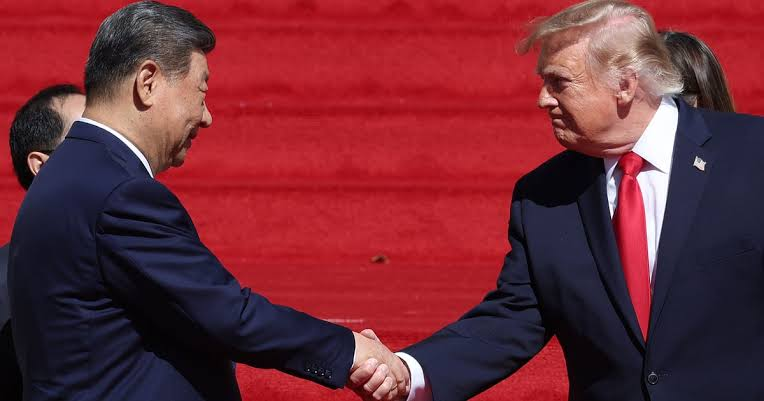
Beijing and Washington have agreed in principle to reciprocal tariff reductions covering roughly $60 billion in two way trade, Chinese and international trade officials said, a concrete economic outcome of President Xi Jinping’s recent visit to the United States. Each side has identified about $30 billion of non sensitive imports that could receive more favourable tariff treatment, according to official statements and trade reporting by major news organisations.
What was announced
Chinese officials said the arrangement was the result of consultations conducted under the newly reinvigorated U.S. China trade mechanism established around the leaders’ meetings. The package is aimed at lowering barriers on a range of agricultural, consumer and industrial products rather than strategic technology items. Beijing’s initial product list includes items such as corn, wheat, meat and dairy. U.S. officials and independent reporting said Washington and Beijing each proposed product lists of comparable value, which together account for about $60 billion of annual bilateral goods trade.
Notable exclusions and limits
Despite the headline number, several important details limit the immediate economic impact. Officials and reporting noted that top U.S. agricultural imports such as soybeans were excluded from China’s public tariff reduction list. Likewise, items deemed sensitive for national security or industrial policy are off limits to this initial round of cuts. The agreement is framed as a reciprocal, targeted relaxation on so called non sensitive goods, not a full rollback of the broader tariffs that have accumulated during years of U.S. China tensions.
The announcements do not change U.S. tariff law automatically, nor do they instantly remove duties charged at customs. In Washington, tariff adjustments require specific administrative or legal steps, and in Beijing, changes also must be translated into official tariff schedules and implementing rules. Analysts therefore expect a phased, technical process that could take weeks to months before lower duties are implemented at the border.
Why Beijing and Washington pursued this deal
The trade move follows a high profile meeting between Presidents Xi Jinping and Donald Trump, in which leaders sought to stabilise a relationship strained by trade disputes, export controls and geopolitical rivalry. For both capitals, a carefully limited tariff reduction offers political and economic benefits without conceding sensitive technology or strategic leverage.
For China, easing tariffs on certain U.S. farm and consumer goods can signal goodwill to American constituencies while supporting domestic supply chains and price stability. For the United States, securing tariff relief for a set of U.S. exporters and preserving a broader truce reduces pressure on manufacturers and farmers hit by retaliatory measures in earlier rounds of the dispute.
Market and diplomatic reaction
Markets reacted cautiously. Observers said the tariff list is a modest early step that could help calm trade tensions but will not resolve deeper structural disputes over subsidies, technology controls and investment screening. Trade groups welcomed improved access for particular exporters but urged clarity on implementation and monitoring mechanisms to ensure the relief is durable.
Diplomatically, the measure fits a pattern of incremental, reciprocal steps intended to manage competition between the two largest economies without removing underlying frictions. Officials on both sides emphasised that the arrangement is part of a broader process of talks, including the establishment of a formal trade council and working groups to tackle customs, compliance and sector specific concerns.
What happens next
Both governments said technical teams will now work through product codes, tariff lines and implementation timetables. That process involves detailed customs harmonisation, legal authorisations and monitoring arrangements. Trade lawyers cautioned that many importers will need to wait for formal announcements before they can change sourcing or pricing decisions.
Analysts warned that the package does not remove the potential for future escalation. Core issues such as export controls on advanced semiconductors, investment screening, and industrial subsidies remain unresolved and could resurface in subsequent rounds of contention. Still, the tariff list provides a near term avenue to stabilise trade flows and reduce headline risk in the global economy.
Why this matters
Even if narrow in scope, the reciprocal tariff arrangement is important because it represents one of the clearest transactional outcomes in months of fraught engagement between Washington and Beijing. By agreeing to a quantifiable, mutually valued list, both sides have created a testable mechanism that could build confidence for further talks. For exporters, especially in agriculture and intermediate goods, the changes could translate into more predictable market access, if and when the reductions take effect.
At the same time, the exclusions underscore that the competition over high tech and strategic industries is likely to persist. The coming weeks will show whether the technical and diplomatic follow through turns the preliminary lists into actual tariff relief that firms can rely on, or whether implementation problems and wider political pressures will limit the deal’s practical effect.
The development forms part of a cautious, step by step process to manage one of the most consequential economic relationships in the world. Observers will be watching how quickly each side turns pledges into enforceable changes at customs, and whether the arrangement becomes the basis for more durable cooperation, or remains a temporary truce.