
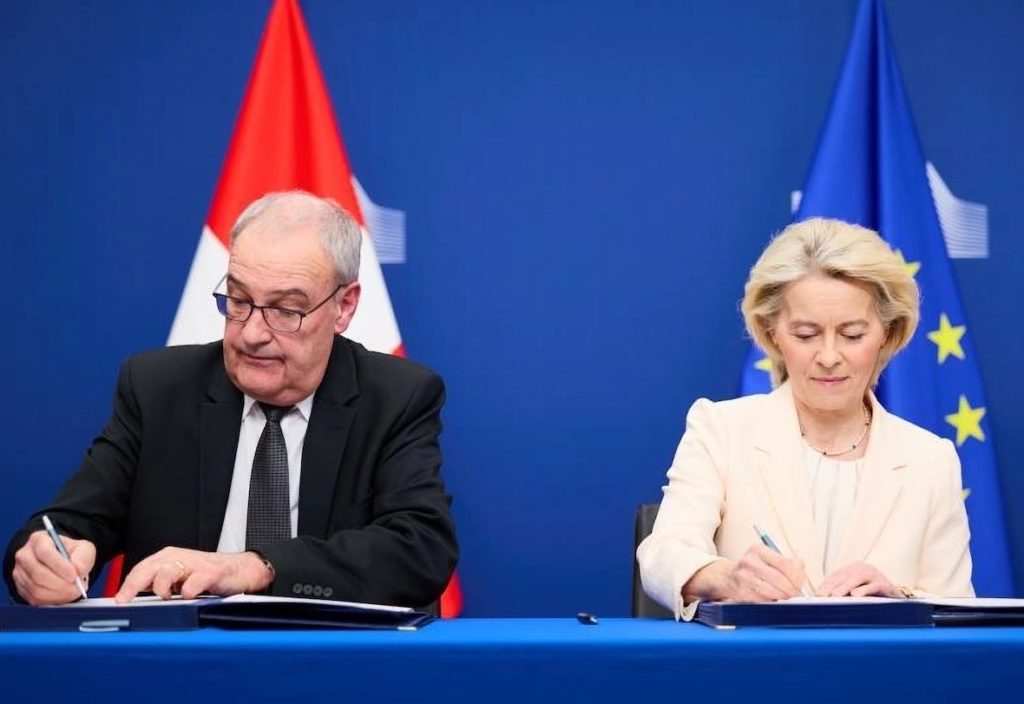
Bern, October 2, 2026 , Switzerland’s Council of States, the chamber that represents the country’s cantons, has voted to place the package of agreements negotiated with the European Union before the voters and the cantons. The measure, approved by senators in a close vote, aims to treat the Bilaterals III package as having constitutional implications and to require a so called double majority for ratification: a simple popular majority nationwide and a majority of the cantons.
What the Senate decided and why it matters
The Council of States rejected the Federal Council’s recommendation for an optional referendum only, and instead backed a parliamentary proposal that would see the Bilaterals III treated as having such constitutional significance that cantonal approval should be required. Backers argue the step is necessary because the agreements touch on core areas of Swiss policy including immigration, wage protection and the dynamic incorporation of parts of EU law.
Under Swiss practice, most international treaties trigger an optional referendum requiring a simple majority of votes if 50,000 citizens collect signatures. A double majority requirement would add an extra hurdle, making approval dependent on a majority in a majority of the 26 cantons, a threshold that historically makes it harder for national initiatives to pass. Opponents of the move warn that raising the threshold could block a long sought stabilisation of relations with the EU, while proponents say it will ensure broader legitimacy for a package that would bind Swiss law to EU rules in sensitive areas.
Political fault lines
The Senate vote exposes divisions across the Swiss political spectrum. Centrist and conservative senators who are worried about giving up de facto control over immigration rules pushed for the double majority. Lawmakers who support closer cooperation with the EU, including many from the National Council, say the package is critical to preserve market access for Swiss business and to maintain cooperation on research, education and regulatory matters.
Parliament will now have to reconcile the Senate position with the stance of the lower house, the National Council, where supporters of the Federal Council’s approach have argued an optional referendum would be sufficient. If the National Council does not accept the Senate’s position, the two chambers will enter a reconcilement process. The timetable for that handling will determine whether ratification proceeds before the next nationwide ballots and whether voters ultimately decide the fate of the package.
What the treaty package contains
Known informally as Bilaterals III, the package bundles several sectoral agreements that the two sides say will modernise and stabilise bilateral relations. Key elements include arrangements on immigration safeguards, the dynamic application of relevant EU rules in sectoral areas, cooperation on research and education, and measures intended to preserve wage protection. The Federal Council has said the package avoids a full institutional framework treaty that Swiss voters rejected in 1992, while Brussels has insisted it will preserve reciprocity and regulatory alignment in important areas.
Implications for Swiss democracy and EU ties
Requiring a double majority would raise the bar for approval and reflect Switzerland’s federal character, which gives the cantons a constitutional say in major national decisions. That could boost regional acceptance but also risks greater polarisation, since rural and smaller cantons tend to vote differently from urban centres. For the Swiss government and business leaders, the move complicates efforts to secure a decisive, rapid yes that would give the treaties clear democratic legitimacy and help anchor bilateral relations with the EU.
From the EU perspective, a double majority requirement introduces uncertainty. Brussels negotiators have said they want legal certainty that agreements will be implemented and remain stable. A referendum that fails, or that passes only after a protracted domestic fight, could set back the two sides’ pragmatic approach and increase friction over access to markets and regulatory cooperation.
Next steps
Parliament must now decide whether to accept the Senate’s recommendation or to propose an alternative route. If the double majority path remains in place, the issue will almost certainly go to voters in a nationwide ballot. Campaigns on both sides can be expected to intensify in the coming weeks, with business groups, unions, cantonal governments and political parties mobilising to shape public opinion.
The Senate’s decision makes the forthcoming months a decisive period in Swiss politics, where federalism, direct democracy and Switzerland’s deep economic links with the EU will collide in a test of public trust and parliamentary resolve.
Reporting from Bern. Analysis by the newsdesk.