New Delhi, India , A sustained wave of student-led protests demanding accountability over an allegedly leaked national medical entrance exam has forced India’s education minister to step down and ignited a broader debate over the role of universities, law enforcement and the state in handling public dissent.
From campus outrage to a national movement
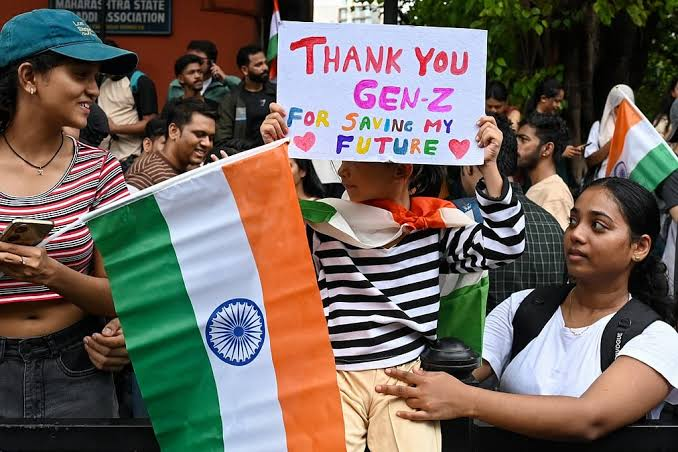
The movement grew rapidly after accusations that the National Eligibility cum Entrance Test, widely known as NEET, had been compromised. What began as campus demonstrations and social media campaigns evolved into mass gatherings in the national capital and other cities, led in large part by a loosely organized youth collective calling itself the Cockroach Janta Party. Protesters accused officials and private actors of undermining merit based admission and demanded an independent investigation and the resignation of senior officials responsible for the exam system.
Demonstrations clustered at New Delhi's Jantar Mantar and at university campuses. Student leaders framed their demands as a defense of the right to equal educational opportunity for lower income and rural families who depend on entrance exams as a merit pathway into professional careers. The protests drew broad public attention when large numbers of young people marched in cities across India, and when police moved to disperse some gatherings, prompting accusations from activists that the state was using heavy handed tactics against nonviolent dissent.
Political fallout and the ministerial resignation
Facing persistent street pressure and negative headlines, the education minister resigned in late July, a development that protesters celebrated as a vindication of their campaign. The resignation did not end tensions immediately. Authorities in several states issued advisories or warnings to universities and student groups, and some universities cautioned students against participating in rallies, citing safety concerns and academic continuity. Legal actions, including first information reports in some jurisdictions, were filed against participants and organisers, raising questions about proportionality and selective enforcement.
The minister’s departure underscored the political sensitivity of high stake examinations in India’s social compact. Entrance tests like NEET influence millions of futures each year, and any hint of malpractice can rapidly galvanize voters and activists across party lines. For the government, the episode was a reminder that failures perceived in public administration of exams can have wide political costs.
Universities, the law and the limits of protest
Central universities issued advisories asking students to refrain from attending certain demonstrations. Administrations said they were concerned about student safety and academic disruption. Critics argued the advisories reflected undue pressure from authorities and risked chilling student free expression. The standoff highlighted a recurring dilemma for Indian higher education institutions, which are trying to balance campus order with long traditions of student activism.
At the same time the judiciary became entangled in the dispute. Courts were asked to weigh in on whether protestors facing arrests should receive protections and how separate criminal complaints should be treated. Legal observers noted that the litigation opened complex questions about the criminal charges that have been used on campuses in recent years, and about the space that remains for protest in a politically charged environment.
Why this matters for Indian society
The protests are significant for several reasons. First, they revealed deep anxieties about fairness in a competitive education system that plays a central role in social mobility. Many families view entrance exams as their best route to professional careers, and allegations of leaks strike at a core sense of justice.
Second, the episode showed how youth and campus movements can quickly shape national politics. The speed with which demonstrations escalated and the visibility they achieved forced a cabinet level resignation, demonstrating that organised student pressure remains a consequential force in India’s public life.
Third, the state response has raised renewed concerns about selective policing and the use of criminal complaints to manage dissent. Legal and human rights groups warned that broad or uneven enforcement risks alienating students and could damage faith in democratic institutions if perceived as repression rather than lawful crowd management.
Outlook and unanswered questions
Authorities have pledged investigations into the alleged paper leak, but many key questions remain unanswered, including the scope of any irregularities, whether systemic vulnerabilities in exam administration will be addressed, and whether courts will set rules limiting the use of certain criminal charges in protests. The durability of the Cockroach Janta Party as an organised constituency is also uncertain. The movement’s ability to convert short term protest wins into longer term policy changes will depend on whether it can coalesce around durable demands and institutional channels for reform.
For now students and their supporters see the ministerial resignation as proof that public pressure can yield results. For policymakers and universities the episode will be a prompt to examine exam security, grievance redress mechanisms and how to engage with student concerns without diminishing civil liberties. The contest over education, fairness and the rules of civic contestation looks likely to remain an active front in India’s public life in the months ahead.