Tokyo summons U.S. envoy after Naha killing
Japan’s foreign ministry summoned the United States ambassador on October 4 and lodged a formal protest after an American Marine was arrested on suspicion of robbing and murdering a Japanese woman at a hotel in Naha, the capital of Okinawa prefecture. The ministry said Japan demanded full cooperation with the police investigation and insisted that U.S. forces take measures to prevent similar incidents in future.
Authorities and diplomats describe the case
Okinawa prefectural police arrested a 20 year old Marine who is suspected of entering the hotel room in the early hours of October 3 and killing a 39 year old woman, then taking her wallet and backpack. Japanese authorities have described the event as extremely brutal and criminal investigators are continuing forensic work and inquiries.
Officials at the Ministry of Foreign Affairs said Foreign Minister Motegi confronted the U.S. ambassador about the incident and demanded that the U.S. military thoroughly enforce discipline and cooperate fully with the investigation. The U.S. Embassy in Tokyo and the ambassador said U.S. authorities had offered condolences, pledged cooperation and were working with Japanese law enforcement to establish the facts.
Why the case matters in Okinawa and Tokyo
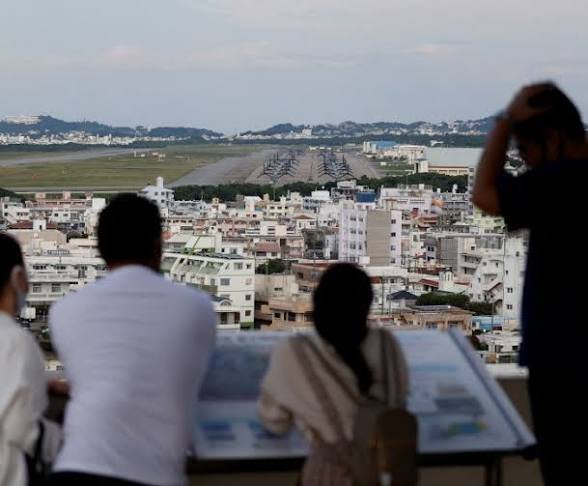
Okinawa hosts a disproportionate share of U.S. forces in Japan, a legacy of the postwar security architecture that has been politically sensitive for decades. Crimes involving service members repeatedly draw strong public reaction on the island and at the national level. Each serious incident tends to reopen debates about the burdens borne by Okinawa residents, base relocations, and the status of forces agreement that governs jurisdiction over U.S. personnel.
Local leaders and residents have long campaigned for reductions in the footprint of U.S. forces and for stricter accountability when crimes occur. The arrest in Naha comes amid heightened public scrutiny of U.S. troop behaviour and renewed calls from some Okinawa politicians for changes to how the bilateral security relationship operates on the ground.
What officials have said
Japan’s foreign ministry statement said the government conveyed “strong protest” and expressed deep regret over the killing. The ministry demanded that the U.S. military take steps to ensure service members respect local law and public safety, and that measures be taken to prevent recurrence.
The U.S. ambassador to Japan expressed condolences to the victim and her family, and said the U.S. government would cooperate with Japanese authorities as the investigation proceeds. U.S. officials have also indicated that the implicated service member is in custody and that the matter is being followed up through appropriate channels under existing bilateral arrangements.
Legal and diplomatic framework
Criminal jurisdiction over U.S. service members stationed in Japan is governed by the U.S. Japan Status of Forces Agreement. In serious criminal cases involving U.S. personnel, the agreement foresees cooperation with Japanese police and prosecutors, while also establishing processes for handling custody and legal procedures. Incidents that involve allegations of violent crime typically result in close coordination between Japanese authorities and U.S. officials at multiple levels, from local base commanders to the U.S. Embassy.
Japan’s formal protest signals Tokyo’s expectation that cooperation will be prompt and transparent, and that the U.S. side will assist with evidence collection and other investigative needs. How the two governments manage both the criminal process and public communications will be watched closely in Okinawa and across Japan.
Broader implications
The arrest risks renewed friction in a relationship that otherwise remains focused on strategic cooperation across the Indo Pacific. For Okinawa, the human and social cost of hosting U.S. forces is a persistent political issue. For Tokyo, balancing alliance defence needs with domestic concerns about safety and local resentment is a continuing challenge.
Analysts say Tokyo and Washington will likely seek to avoid a prolonged diplomatic confrontation. Still, the incident is likely to strengthen calls for enhanced discipline and oversight of deployed personnel and may renew attention to steps that would reduce risks to local communities.
What comes next
Japanese prosecutors will determine whether to indict the suspect once the police investigation is complete. Meanwhile, the foreign ministry has said it will monitor developments closely and continue discussions with U.S. officials. Local officials in Okinawa and national politicians will also press for clear, concrete measures to prevent a recurrence, and the case is expected to figure in ongoing debates over the U.S. military presence on the island.
As the investigation continues, both Tokyo and Washington say they will cooperate to establish the facts and ensure justice is served while addressing the deep public concern the case has generated.