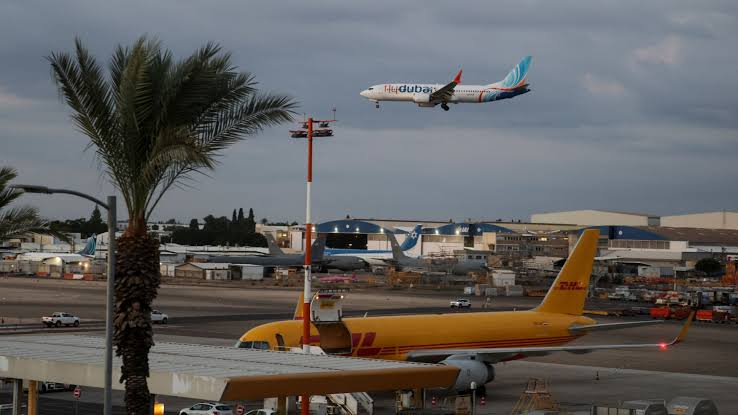
Passengers and crew subdued an Omani co-pilot who stabbed his captain and tried to force a Flydubai aircraft bound for Tel Aviv into a crash, Israeli officials and investigators said, as authorities from several countries opened probes into the motive and wider security implications.
What happened aboard the aircraft
The flight, operating from the United Arab Emirates to Tel Aviv, diverted and ultimately landed safely in Saudi Arabia after a violent confrontation in the cockpit. According to passenger accounts and official summaries, the co-pilot attacked the captain, who was wounded, and the jet entered a sudden steep descent before other crew and passengers entered the cockpit, restrained the assailant and stabilized the aircraft.
Passengers later described scenes of chaos and bloodied crew members, with at least one captain reportedly injured and multiple people assisting to prevent the plane from crashing. Israeli authorities have said the plane carried mostly Israeli passengers, heightening the incident’s political and security ramifications in Israel.
Investigations and competing leads
Israeli, Emirati and Saudi authorities, together with the airline and aviation safety agencies, opened immediate inquiries. Israeli Prime Minister Benjamin Netanyahu said the probe would examine the roots of the co-pilot’s motives and suggested the attacker had undergone recent religious radicalization, a claim his office did not further document publicly while investigations continued.
Regional and international investigators focused on several lines of inquiry, including whether the act was a lone violent episode, an attempted terror attack, or the result of mental health or personal grievances. Israeli officials said they might participate in the broader probe, and airlines and regulators temporarily adjusted services and flight procedures in the region as authorities reviewed security and screening protocols.
Political reactions and diplomatic sensitivities
The incident came weeks before Israeli national elections and days before the anniversary of the 2023 cross border attacks that reshaped Israeli politics and security policy. Israeli leaders linked the event to national security concerns, and political opponents used the episode to press the government on aviation and border security, and on whether adequate intelligence and preventive measures were in place.
Internationally, the episode added tension to relations across the Gulf and with Iran. U.S. officials and other capitals monitored developments closely. Public statements by senior political figures who suggested state links to the attacker drew scrutiny, because a premature attribution to an international sponsor can escalate diplomatic tensions quickly. Investigators have urged caution until forensic and intelligence evidence is complete.
Airline and aviation sector impact
Flydubai described the cockpit altercation as an altercation that forced diversion and landing in Saudi Arabia. Several carriers and regional airports reviewed operational protocols for flights to and from Israel. Some carriers temporarily suspended or adjusted services while regulators examined crew assignment rules, passenger screening processes, and controls governing cockpit access and security.
Industry experts said the incident will likely prompt aviation authorities to reexamine hiring and vetting processes for crews on routes that touch politically sensitive destinations, and to revisit contingency procedures for in flight medical or security emergencies.
Why the event matters
Beyond its immediate human drama and fortunate outcome, the episode raises questions about aviation security in a region where geopolitics intersects with commercial travel. It highlights gaps investigators will want to close regarding crew vetting and whether any warning signs were missed. Crucially, the event occurred at a fraught moment in Israeli politics and security policy, magnifying its domestic resonance and the potential for rapid political exploitation.
For Israeli voters and policymakers, the attack underlines enduring anxieties about security ahead of an election that is principally framed around national defense and public safety. For regional diplomacy, any credible link to a foreign actor would have immediate consequences, even though investigators cautioned that such linkages require rigorous proof.
Next steps
Investigators from the countries involved said they will share forensic, flight recorder and intelligence material as they assemble a fuller picture. Airlines and regulators in the region signalled readiness to adopt short term operational changes where needed and to cooperate on any findings that have wider implications for route safety. Israeli officials pledged to follow the inquiry to its conclusion and to take any recommended security steps.
Passengers who helped stop the attack have been widely recognized in Israeli public accounts, and several have provided testimony to authorities. As the technical investigation proceeds, officials emphasized the need to avoid premature attributions and to let the evidence from flight recorders and security services determine motive and responsibility.
The incident has already reshaped public debate in Israel about preparedness and oversight, and it will remain a focus as investigators release facts in the coming days and weeks.