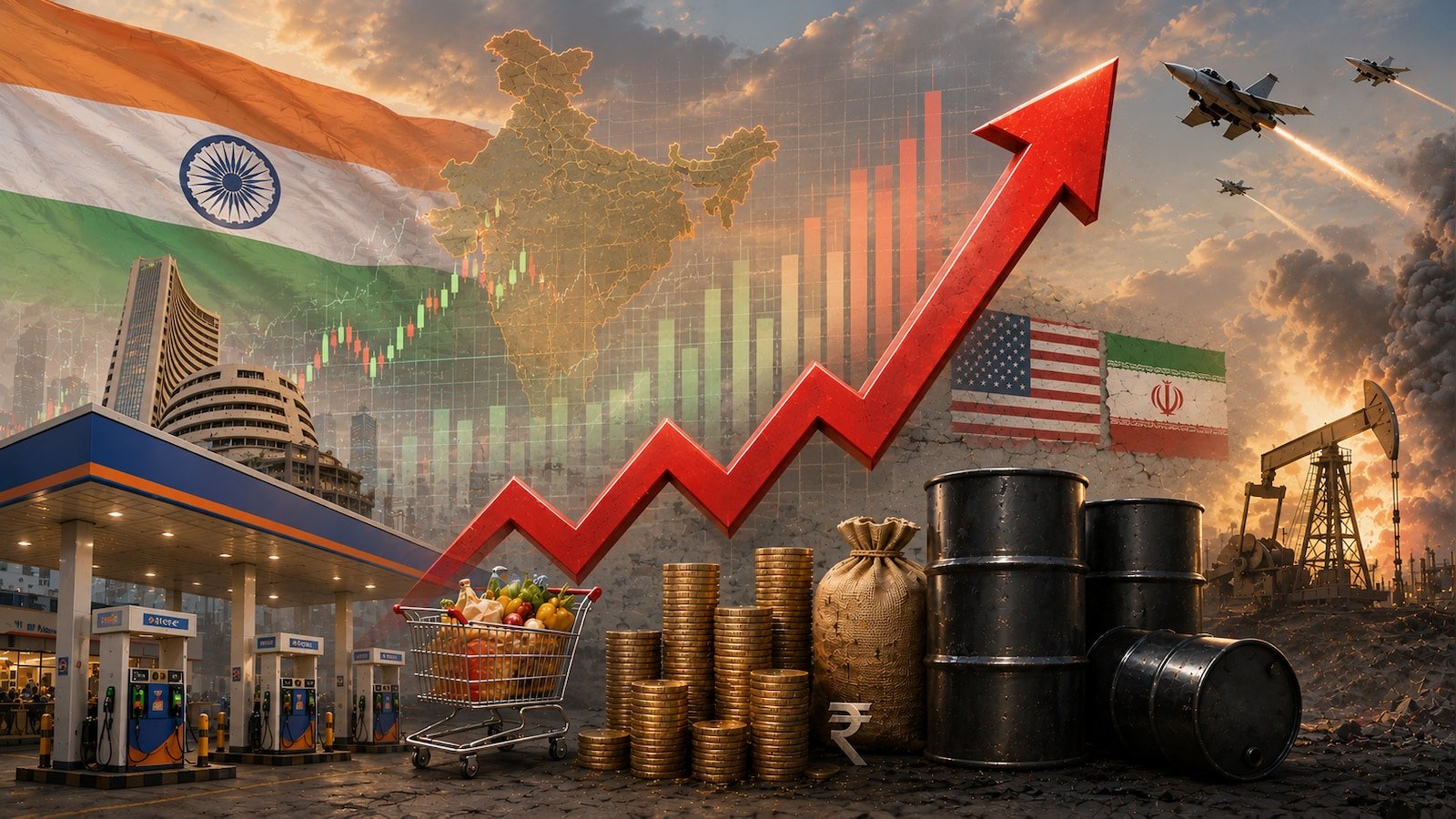
New Delhi. India began the second quarter of fiscal 2027 from a position of robust growth, but the government on October 1 said that the outlook faces fresh upside inflation risks and pressures on capital flows driven by a mix of climate shocks, higher energy costs, and an uncertain global policy backdrop.
Growth remains strong, but risks are stacking up
The Finance Ministry's September Monthly Economic Review, published on October 1, reported that high frequency indicators point to continued activity into the July to September period, and that preliminary estimates put real GDP growth for the quarter at roughly 7.3 percent. That follows an unusually strong first quarter outturn, when GDP grew 7.8 percent.
Despite those headline numbers, the review warned that the macroeconomic environment has become more challenging. It singled out a recent spike in crude oil prices, climate related supply disruptions that could push up food prices, and tighter global financial conditions as factors that could create imported and supply driven inflationary pressures for India.
Capital flows, exchange rate and investor sentiment under pressure
The report cautioned that sustained volatility in global markets, including rising bond yields in advanced economies and trade uncertainty, could make attracting and sustaining foreign capital more difficult. That, in turn, could place short term pressure on the rupee and limit the availability of stable external financing at attractive rates.
The Finance Ministry emphasised that while India retains strengths, such as resilient services exports, strong remittances and comfortable foreign exchange reserves, these structural positives do not eliminate near term vulnerabilities tied to the evolving global environment.
Policy implications for central bank and government
Policymakers face a balancing act. With domestic demand strong, the authorities will have to weigh the risks that persistent or rising inflation poses to household purchasing power and investor confidence. The review noted that supply shocks and imported inflation may prompt monetary tightening, signaling potential rate moves by the Reserve Bank in response to evolving price dynamics.
At the same time, the government underscored the need to protect growth momentum through targeted measures that support investment and rural demand, including monitoring of agricultural output and key supply chains to mitigate food price pressures.
Why this matters geopolitically
The Finance Ministry framed some of the economic risks in geopolitical terms. Increasing geopolitical polarisation and tariff uncertainties, particularly in advanced markets, were named among the headwinds that could hamper capital inflows and trade. Those dynamics matter because India is seeking to lock in strategic economic partnerships and attract long term productive investment for technology, manufacturing and energy transition projects.
In practical terms, higher energy import bills and any sustained rupee weakness could complicate fiscal planning ahead of major policy milestones and compel the government to prioritise measures that shore up external stability and investor confidence.
Outlook and next steps
The review recommended close monitoring of crude oil trajectories, food supply conditions and global financial market developments, suggesting that the authorities will remain vigilant and responsive. India will also continue to lean on its sizable foreign exchange buffers and ongoing reform and investment initiatives to reduce structural vulnerabilities over time.
For now, the combination of a still resilient domestic economy and a more volatile external environment sets up a period of selective risk management, where sustaining growth will depend on the government and the central bank navigating trade offs between supporting activity and containing inflation and currency pressures.
As the global picture evolves, markets and foreign investors will be watching closely for signals from India on policy responses to inflationary pressures and for any updates to macroeconomic forecasts from official sources.