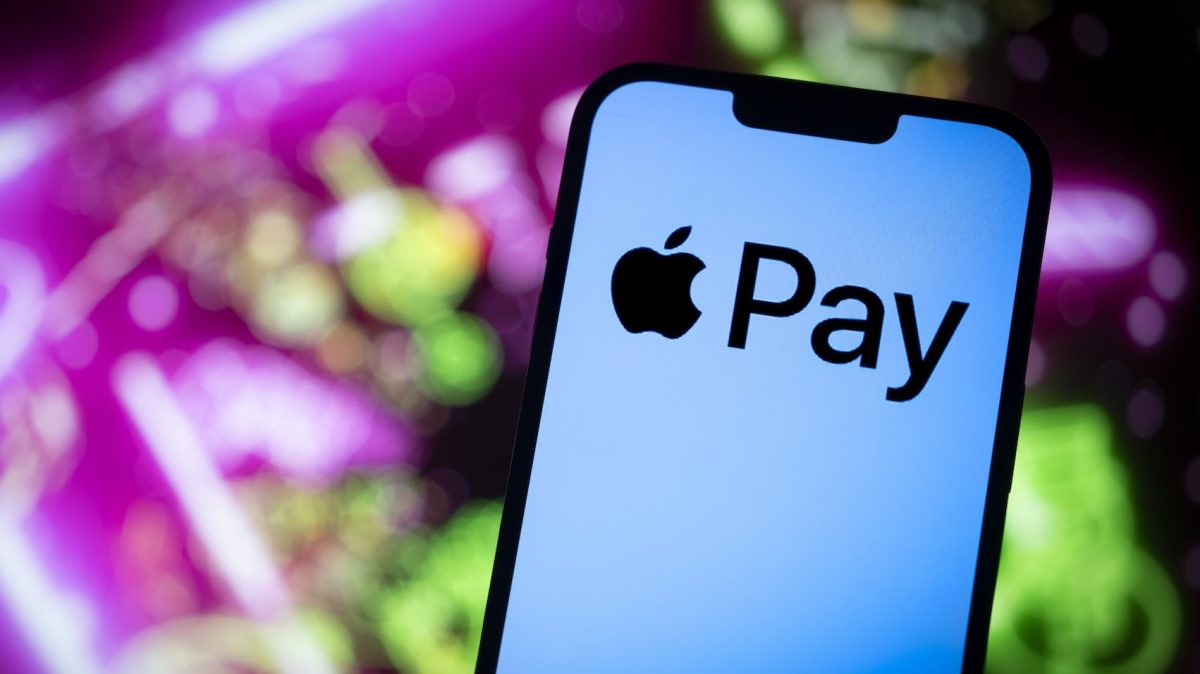
Apple has launched its Apple Pay service in India through a commercial arrangement with Axis Bank, making the payment platform available to eligible Axis Bank credit cardholders on the Visa and Mastercard networks. The move gives the iPhone maker a formal foothold in one of the world’s largest and fastest growing digital-payments markets, where real time bank transfers using the Unified Payments Interface, or UPI, dominate retail volumes.
What opened today and what is still missing
Under the initial rollout customers who hold qualifying Axis Bank credit cards can add those cards to Apple Wallet via the Axis Bank mobile app or directly in Apple Wallet, and then pay contactlessly in stores, inside apps and on websites using Face ID, Touch ID or a device passcode. Apple and Axis Bank are publicly positioning the launch as a phased entry, with acceptance at many merchants that already support contactless or NFC payments.
But two important limitations stand out. First, Apple Pay will not support cards on India’s domestic RuPay network at launch. Second, the service is not initially integrated with UPI, the nation’s instant retail payments system that handles the majority of digital transactions by volume. That leaves Apple Pay operating in a smaller, card-centric segment of India’s payments landscape, rather than the rails used by most consumers for peer to peer transfers and small merchant payments.
Why Apple chose Axis Bank and why banks matter
Axis Bank, one of India’s larger private banks and a significant credit card issuer, is the first Indian bank to put cards on Apple Pay. Commercial terms between Apple and banks are the practical gatekeepers for Apple Wallet support. Historically Apple has negotiated direct arrangements with card issuers and networks in each market, often taking a small fee on transactions and requiring banks to support device-level tokenisation and authentication methods.
Apple’s entry through Axis Bank mirrors the way other markets have seen Apple Pay expand bank by bank. Industry analysts say that once commercial terms are agreed with more issuers, Apple Pay’s reach in India can grow rapidly. But those negotiations will have to account for India’s unique payments architecture, particularly UPI’s central role and the widespread use of RuPay debit cards issued by public sector and private banks.
UPI and RuPay: the missing pieces and the regulatory context
India’s Unified Payments Interface has become the global exemplar of instant retail payments, handling an outsized share of transactions by volume and value for small payments. UPI’s prominence has also prompted regulators to treat interoperability and low-cost access as policy priorities. RuPay, India’s domestic card network, is widely used for debit payments and government disbursements, and has been aggressively promoted to lower transaction costs in the domestic market.
Because Apple Wallet currently links to card networks first, integrating UPI will require technical, commercial and regulatory coordination with the National Payments Corporation of India, which operates UPI, and with sponsor banks. Separate talks with other banks and with NPCI will determine whether Apple Pay can offer a UPI-backed tap to pay experience or wallet-style integration in future phases.
Merchant fees, consumer choice and competition
Apple’s entry has immediate implications for merchants and issuers. Apple routinely charges a small fee to banks in many markets for card transactions routed through Apple Pay. Those fees and the platform’s convenience have generated debate elsewhere about whether the added convenience justifies the cost, and whether Apple’s commercial position should be regulated when a large share of consumers use its devices.
In India, where merchant margins for payment acceptance can be tight and UPI transactions are often cheaper than card payments, merchants and payment processors will watch whether Apple Pay drives incremental card spending, changes merchant acceptance behaviour, or leads to negotiations over interchange and acceptance costs. For consumers, Apple Pay adds another secure, device-bound option for payments, but its impact on everyday payment choices will depend on whether it can compete with UPI convenience and low cost.
What this means for users and what to watch next
For now, the main beneficiaries are Axis Bank credit card customers who use Apple devices, receiving a widely supported, biometric-secured way to pay without sharing card details with merchants. The broader questions are whether Apple Pay will quickly expand to more banks, whether RuPay support and UPI integration will follow, and how Indian regulators and the payments industry will respond to Apple’s commercial model.
Watch for two developments in the coming weeks: announcements from other major card issuers about joining Apple Pay, and any statements or technical proposals from the National Payments Corporation of India on integrating UPI with device-based wallets. If Apple negotiates UPI integration or RuPay acceptance, the service could start to reach the same scale as other major payment methods in India. If those steps are delayed, Apple Pay will coexist alongside, rather than displace, UPI as the dominant retail rail.
The launch underscores how global payment platforms must adapt to India’s distinctive regulatory and technical ecosystem. For consumers the immediate change is convenience for a specific group of cardholders. For the industry the arrival of Apple Pay signals a new round of commercial and regulatory conversations over interoperability, fees and the future shape of digital payments in India.