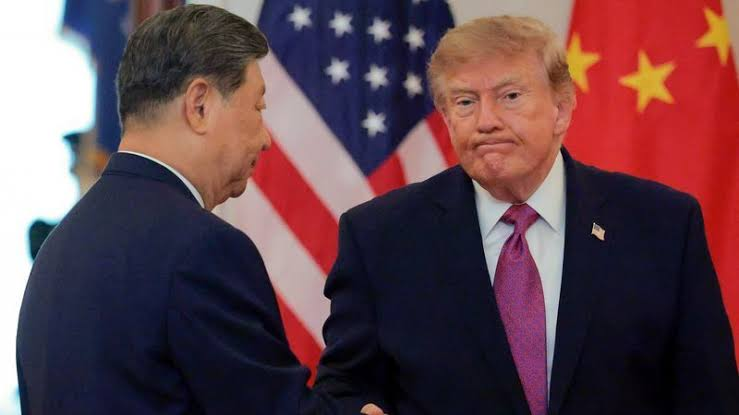
China and the United States announced on September 26, 2026 that they will open a formal channel for strategic dialogue on artificial intelligence, including a proposed notification mechanism for AI incidents, following Chinese president Xi Jinping's state visit to Washington. The agreement, disclosed after bilateral meetings, signals Beijing's willingness to engage Washington on AI risk management while protecting a fast growing domestic AI industry that has been the focus of intensive regulation at home.
What was agreed in Washington
Leaders on both sides described the step as a pragmatic way to reduce the chance of accidents and escalations stemming from advanced AI systems. The United States proposed a mechanism to notify the other side about AI incidents that could have cross border security implications, and Chinese officials accepted the idea in principle while stressing the need for mutual respect and equal treatment. Beijing framed the pledge as part of a broader commitment to build constructive strategic stability with Washington.
Why China is engaging now
China arrives at these talks with a highly active domestic AI agenda. Over the last two years Beijing has issued a string of rules on generative AI, mandatory labelling of AI generated content, new standards for AI agents, and guidance on anthropomorphic AI. Those measures are intended to control social and political risks. At the same time Chinese firms and state owned enterprises are moving rapidly to deploy sector specific large models for utilities, finance and telecoms, creating new industrial ties that Beijing wants to safeguard.
Chinese leaders have two incentives to take part in a formal U.S. dialogue. The first is risk control. Beijing, like Washington, has reason to limit accidental harm, misinformation and misuse from increasingly powerful models. The second is strategic, China wants to help shape the global norms that will govern export controls, cross border research collaboration, and standards for model safety and data governance. By negotiating directly with the United States, Beijing can press for rules that acknowledge China specific regulatory choices and its industrial policy goals.
Domestic constraints and diplomatic balancing
Engagement with the United States comes while China still pursues a cautious domestic stance toward some consumer AI applications. Regulators have recently removed millions of items of AI generated content from major domestic platforms, tightened app store vetting, and issued court guidance on deepfakes and voice cloning. Those domestic controls create a two track dynamic, where Beijing seeks international cooperation on worst case risks, while also maintaining strict oversight of how AI is developed and deployed inside China.
Chinese officials have emphasized that any international notification or cooperation must respect China’s laws on data sovereignty, personal information protection and national security. That will complicate operational details for an incident notification mechanism, for example how evidence is shared, how investigations are conducted, and which regulatory bodies get access to sensitive data. Negotiators on both sides will need to design procedures that prevent misuse of shared information while allowing timely alerts for risks that cross borders.
Implications for industry and standards
For Chinese technology companies, the dialogue could deliver both relief and new requirements. On one hand, improved risk communication channels may reduce abrupt export restrictions or reputational shocks that can harm international business. On the other hand, closer U.S. scrutiny and possible joint frameworks could accelerate demands for independent safety testing, certification, and auditability that raise compliance costs for firms.
Beijing has been pushing an extensive domestic standards program and has dozens of draft and finalized technical standards for AI. A bilateral dialogue with the United States creates a path to align some technical definitions and testing methodologies, but it is unlikely to eliminate deeper geopolitical friction over access to advanced chips, design tooling, and high end cloud compute. Those are areas where both countries see strategic advantage, and they are likely to remain contested.
What comes next
The announcement on September 26 sets a diplomatic timeline rather than an immediate technical protocol. Officials from both countries will need to define the scope of the AI dialogue, the agencies involved, and precise confidentiality and incident sharing rules. Observers expect working level groups to form first, focused on risk scenarios like accidental model manipulation, harmful biological or cyber applications, and deepfake driven influence operations. Any real time notification system will require operational playbooks, secure communications links, and legally acceptable evidence sharing arrangements.
For Beijing, the dialogue is a chance to normalize its regulatory approach internationally while preserving a domestic model that prioritizes social control and industrial strength. For the rest of the world, a bilateral US China AI channel is likely to influence multilateral standard setting, as governments and firms watch whether the two largest AI markets can agree on at least the basics of incident management and risk reduction.
September 26, 2026 marks the start of a new diplomatic chapter in AI policy between China and the United States. The substance of that chapter will be written in months of technical talks, and it will matter for governments, platforms, customers and citizens who increasingly live in a world shaped by large scale AI systems.