Japan stepped up its public research and policy push on artificial intelligence on October 2, 2026, as the New Energy and Industrial Technology Development Organization published details and announced the second AI Safety Symposium, and the National Institute of Advanced Industrial Science and Technology made related programme materials available. The events and publications form part of a coordinated, government linked effort to move AI safety from research into practice across industry, robotics and public services.
What was announced today
The New Energy and Industrial Technology Development Organization published an event notice and supporting materials on October 2, 2026, announcing the second AI Safety Symposium. The symposium is organised within NEDO’s larger research programme on AI safety, and intends to bring together researchers, engineers, regulators and industry actors to share evaluation methods, guidelines and implementation experiences for AI systems operating in both virtual and physical environments.
Separately, the National Institute of Advanced Industrial Science and Technology posted programme and background material for the related AI Safety Symposium, describing a two part meeting structure that includes a sub event focusing on domain specific safety questions and a main conference with presentations, panels and demonstrations. The AIST materials emphasise evaluation, benchmarking and cross sector collaboration as symposium priorities.
Why this matters for Japan and for industry
The announcements reflect a clear, coordinated turn in Japan from descriptive policy work to practical, operational tools designed to make AI deployment safer in real settings. Japan’s public research organisations have been working since 2025 on constructing benchmark tests, portability of evaluation protocols, and guidelines that firms and public agencies can adopt. The NEDO programme that produced the symposium materials also released, earlier this year, a set of baseline guidelines and evaluation protocols intended to become a common reference for safety testing and quality management of generative models and robotics.
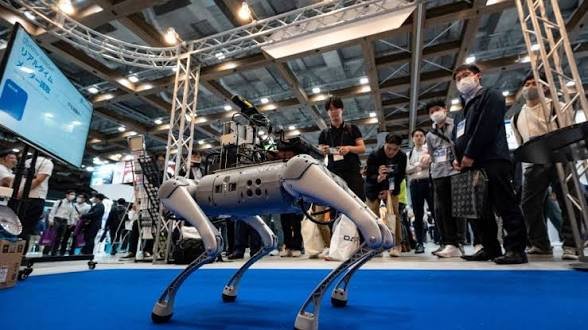
Those research outputs are significant for three reasons. First, they seek to bridge the gap between abstract safety principles and concrete engineering and auditing practices, offering reproducible tests and management practices that companies can implement. Second, Japan’s approach explicitly covers both online generative AI and physical systems such as robot assistants, a hybrid focus that reflects the country’s industrial strengths in robotics and manufacturing. Third, the work is positioned to feed into domestic regulatory and procurement requirements, accelerating adoption across public services, infrastructure and regulated sectors.
What the symposium will cover
Programme descriptions and public notices indicate the symposium will run across two days, with an initial sub event dedicated to domain specific safety issues followed by a main conference presented in a hybrid format. Sessions listed include benchmarking and quality management for language models, safety evaluations for AI that interacts with physical systems, and presentations on tools and protocols to measure and improve AI robustness and traceability. The organisers are emphasizing active exchanges among developers, safety researchers and end users, together with demonstrations of evaluation environments and practical toolkits.
How this fits into Japan’s broader AI strategy
Japan has been developing its industrial AI safety ecosystem for several years, combining public research funding, national institute projects and industry working groups to establish shared standards. The recent publications and the symposium announcement illustrate an effort to consolidate early research outcomes into resources that can be adopted by firms and public agencies. This work sits alongside parallel government initiatives to promote AI deployment while addressing legal and institutional preparedness for the technology.
For companies operating in Japan, the push means that technical safety measures, documented evaluation processes and demonstrable quality management practices will become ever more important when bidding for public projects or partnering with domestic research bodies. For international developers, the outputs coming from these Japanese programmes represent an increasingly influential set of benchmarks and expectations to which products and services will be compared when entering the Japanese market.
Next steps and what to expect
The NEDO and AIST event pages show that further announcements, including the symposium agenda, speaker lists and publications of experimental results, will be made public in the lead up to the main conference sessions. Practitioners, regulators and vendors should expect concrete deliverables from the symposium in the form of refined guidelines, shared benchmarks and demonstration code or evaluation environments.
As Japan pursues practical AI safety mechanisms that cover both digital and physical AI systems, the outcomes of this symposium and the associated public research programmes are likely to influence government procurement, private sector risk practices and international standardisation conversations on safe AI design and deployment.
Reporting for this newsroom will follow developments from the symposium as programme details and research outputs are published in the coming weeks.