Home / Technology & AI / China pushes AI and digital trade into commercial stage at Hangzhou expo, unveils global digital trade report
China pushes AI and digital trade into commercial stage at Hangzhou expo, unveils global digital trade report
At the fifth Global Digital Trade Expo in Hangzhou, Chinese officials and companies framed artificial intelligence as a commercial engine for cross border services, releasing a major digital trade report and staging demonstrations meant to move AI from labs into paying markets.
By Ethan Marlowe · Published September 26, 2026 at 6:21 PM
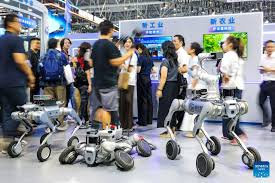
AI and digital trade exhibits at the Hangzhou Global Digital Trade Expo.
Hangzhou, Zhejiang Province
At a five day trade and technology gathering that peaked on Saturday, Chinese officials and industry groups used the Global Digital Trade Expo in Hangzhou to press a practical agenda for artificial intelligence. The event combined a high profile release of a new Global Digital Trade Development Report with demonstrations aimed at turning large language models, cloud infrastructure and AI powered services into exportable products for global buyers. Organizers said the fifth edition of the exposition, which runs from September 23 through September 27, drew more than 2,000 exhibitors and nearly 10,000 registered international buyers. The show floor featured dedicated zones for AI, smart mobility, digital health and Silk Road e commerce, and an innovation integration area designed to spotlight technologies that organizers say are ready for commercial deployment. The Global Digital Trade Development Report 2026, released during the expo program, is the central policy deliverable of the week. Organizers and government statements highlighted the report as evidence that digitally deliverable services are now a major driver of trade growth, with cloud services, data center capacity and AI enabled business tools singled out as the fastest expanding categories. Chinese officials and state linked outlets described the numbers in the report as showing robust expansion in digitally delivered exports and as an argument for building supply chain capacity in intelligent computing, model hosting and cross border compliance services. For industry players, the message was concrete. Domestic cloud providers and chip designers were exhibiting productized stacks for hosting large models, while dozens of companies offered model as a service packages aimed at enabling overseas buyers to embed Chinese AI functions into e commerce, logistics and factory automation. Demonstrations included multilingual customer service agents trained for cross border merchants, computer vision systems for port and warehouse automation, and AI enhanced translation and content localization pipelines meant to speed up exporting digital goods. The expo also staged a series of forums and competitions focused on open source AI, embodied intelligence and brain computer interfaces, signaling Beijing and provincial authorities want to showcase both commercial readiness and a broad innovation pipeline. Local government hosts emphasized industrial cooperation and foreign procurement opportunities, framing the event as a marketplace rather than as a pure research showcase. Why the shift matters China has spent the last decade prioritizing core capacities related to AI, from chip fabs to model training infrastructure. At Hangzhou, the emphasis moved beyond national capability building toward sellable services and international market positioning. That shift has three practical implications. First, it shortens the commercialization pathway for research and infrastructure, by bundling compute, models and application engineering into turnkey services that overseas companies can adopt without building their own stack. Second, it expands the scope of digital trade to include services that depend heavily on compute and data, not only software code, which affects how nations track and regulate cross border digital flows. Third, it will intensify competition for markets in sectors such as cloud, edge computing and AI as a service where customers may prefer bundled delivery and regional compliance support. Organizers and Chinese authorities framed these moves as a way to convert the country’s scale in digital infrastructure into export revenue and international partnerships. They also emphasized standards work and testing bases, proposing that trusted testing zones and pilot programs be used to reassure foreign clients about performance and compliance. Questions and limits Industry observers and trade policy specialists say several constraints could complicate the export push. Practical barriers include data localization rules, cross border privacy regimes and export control regimes in other jurisdictions that limit where certain models and chips can be transferred or hosted. Buyers in some markets will weigh concerns about supply chain resilience and regulatory compatibility when purchasing deeply integrated AI services. Experts also note the difference between demonstration floor readiness and sustained commercial uptake. Converting pilot customers into repeat and scale customers will require transparent SLAs, clear IP and data handling terms, and long term local support. On the technology side, packaging advanced AI features into reliable, auditable services will remain an engineering challenge when models are adapted for diverse languages, regulatory contexts and sectoral uses. What to watch next The remainder of the expo schedule includes a series of targeted matchmaking sessions intended to convert procurement interest into contract pilots. Organizers said they would publish additional follow up materials and datasets tied to the Global Digital Trade Development Report, including sector level breakdowns for AI and cloud services exports. Observers will be watching whether orders announced at the show translate into concrete export contracts and longer term cross border partnerships. For policymakers outside China, Hangzhou offers a live view of how a major economy is packaging its strengths in compute and AI for international markets. The exhibition illustrates how trade in digital services is evolving, and why trade policy and regulatory cooperation will be central to governing rapidly expanding flows of AI infrastructure, models and services across borders.
Ethan Marlowe is a journalist and contributor at QuantumNova covering stories across a wide range of topics. His work focuses on clear reporting, credible information, and helping readers understand important developments and their broader context.
Huawei and Qualcomm announced a multiyear cross license and patent purchase agreement on October 5, 2026. The deal covers 5G, compute, networking and artificial intelligence technologies, and marks a notable commercial rapprochement with implications for Chinese AI infrastructure and chip ecosystems.
The Linux Foundation and Agentic AI Foundation open the MCP Dev Summit in Toronto on October 5, 2026, bringing maintainers, cloud vendors and Canadian operators together to debate standards, governance and production deployments of agentic AI.
Google’s new Googlebook laptops, built around Gemini AI and on device NPUs, arrive in Australian stores on Monday October 5. The line aims to put Gemini capabilities and developer tooling directly on laptops sold through local retailers, with bundled Google AI Pro trials and partner models from Acer, ASUS, Dell, HP and Lenovo.
A senior OpenAI safety researcher has resigned and published a public critique of the company culture, arguing that iterative deployment of advanced models is no longer acceptable. The departure, reported in major outlets today, sharpens regulatory and industry focus on how US AI labs manage safety and operations.