Global financial markets are confronting a combination investors have spent years hoping to avoid: expensive energy, rising borrowing costs and persistent inflation arriving at the same time.
The US 10-year Treasury yield has climbed to around 5%, reaching levels not seen since 2007, while crude oil remains above $100 a barrel after months of geopolitical disruption. Central banks are responding by maintaining or increasing interest rates, adding another source of pressure on consumers, companies and governments.
Together, those forces have revived a term that can make investors particularly uncomfortable: stagflation.
What Is Stagflation?
Stagflation describes an economy experiencing persistently high inflation while economic growth is weak or stagnating.
Normally, inflation is associated with strong demand. Consumers spend more, companies expand and prices increase as the economy grows.
Stagflation is different because prices can remain elevated even when economic momentum deteriorates. That leaves central banks with an unusually difficult choice: raise interest rates to fight inflation and risk weakening growth further, or reduce borrowing costs to support the economy and risk allowing prices to rise faster.
The current combination of energy shocks and tighter monetary policy is why investors are discussing that possibility again.
The 10-Year Treasury Yield Has Reached a Critical Level
One of the clearest signs of changing financial conditions is the US government bond market.
The yield on the benchmark 10-year Treasury has moved to around 5%, its highest level since before the global financial crisis.
That number matters well beyond professional bond traders.
Treasury yields influence borrowing costs across the economy. Mortgage rates, corporate borrowing, investment valuations and other forms of credit can all be affected when government bond yields move substantially higher.
For companies, expensive borrowing can make expansion projects less attractive. For households, it can make mortgages and other financing more difficult to afford.
Oil Above $100 Adds Another Inflation Problem
Energy is the second major part of the equation.
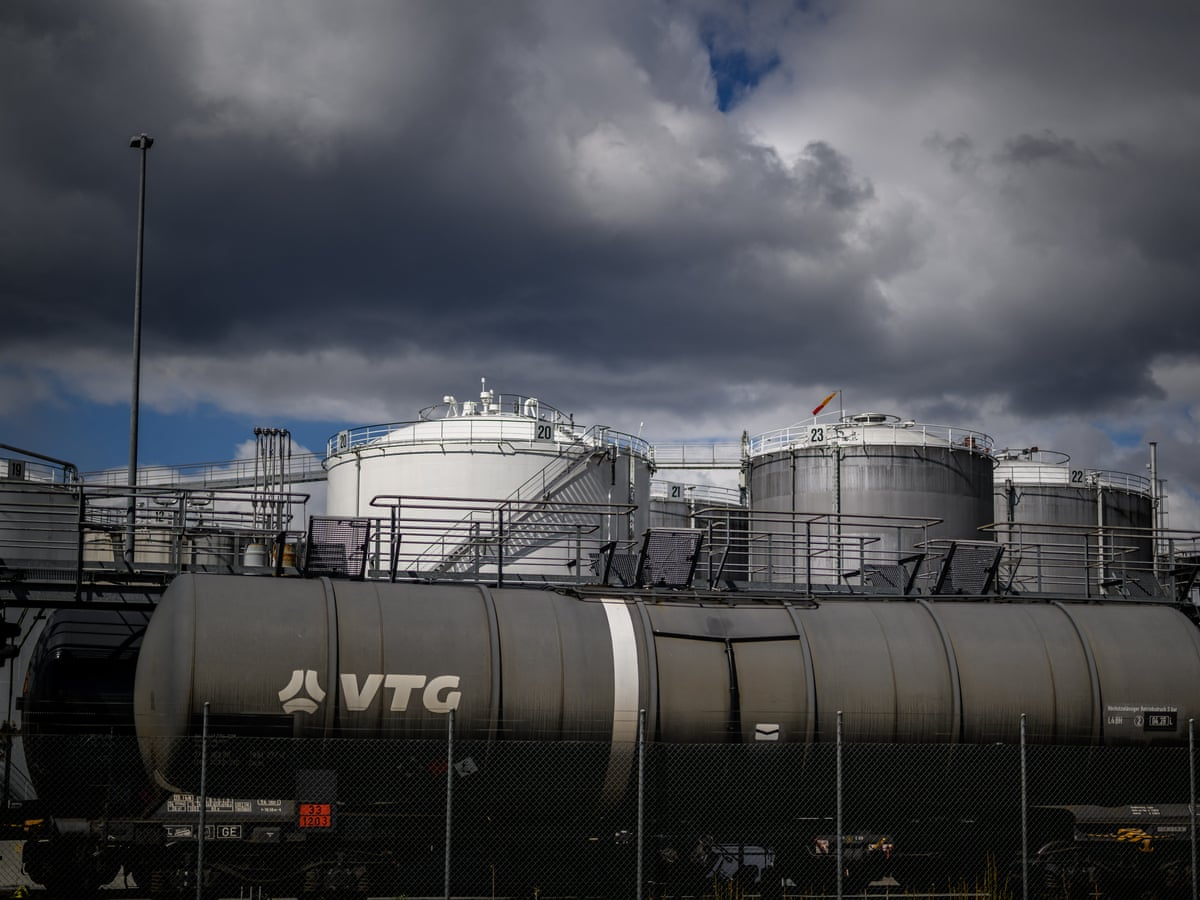
Brent crude remained above $100 a barrel on Friday as markets continued assessing supply risks connected to conflict and disruption in the Middle East. Reuters reported Brent around $104 during Friday trading, while US West Texas Intermediate was around $103.
Oil matters because its price can filter through much of the economy.
Transport companies pay more for fuel. Airlines face higher operating costs. Manufacturers spend more moving raw materials and finished products. Consumers can face higher petrol and transportation costs.
Companies may eventually pass some of those additional expenses to customers, adding to inflation.
Central Banks Are Fighting Back
Central banks have responded to persistent inflation with tighter monetary policy.
The US Federal Reserve raised its benchmark interest-rate target by 25 basis points this week to 3.75%–4.00% and indicated that additional tightening could follow.
Japan also moved in the same direction on Friday. The Bank of Japan raised its policy rate to 1.25%, the highest level in 31 years, while Governor Kazuo Ueda signalled a stronger focus on preventing inflation from moving persistently above the central bank's target.
The simultaneous tightening across major economies demonstrates how widespread inflation concerns have become.
Why Higher Rates Can Hurt Businesses
Interest rates affect companies in several ways.
Businesses frequently borrow money to build factories, purchase equipment, acquire competitors, finance inventories or invest in new technologies. When rates increase, those projects become more expensive.
Companies carrying substantial existing debt can also face higher refinancing costs when loans or bonds mature.
The effect can eventually influence employment and investment. A project that made financial sense when borrowing was inexpensive may no longer produce an acceptable return when financing costs increase substantially.
Smaller businesses can be particularly vulnerable because they generally have fewer financing options than large corporations.
Consumers Feel the Pressure Too
Households experience the same process through mortgages, car loans, credit cards and other borrowing.
Higher interest costs reduce the amount of money consumers have available for discretionary spending.
That matters to businesses because consumer spending is a major component of economic activity in many countries.
If households begin reducing purchases while companies simultaneously face higher costs, economic growth can slow even while prices remain elevated.
That is precisely the combination that makes stagflation so difficult to manage.
Stock Markets Are Starting to React
Global equities weakened on Friday as investors absorbed the changing interest-rate environment.
Reuters reported declines across global shares while government bond yields moved higher, reflecting concerns that central banks may need to keep policy restrictive for longer than investors previously expected.
Higher bond yields can also change how investors value stocks.
When safe government securities provide more attractive returns, investors may become less willing to pay extremely high valuations for riskier assets. Companies whose expected profits lie far in the future can be particularly sensitive because higher discount rates reduce the present value investors assign to those future earnings.
Even the AI Boom Faces the Higher-Rate Test
Artificial intelligence has been one of the strongest investment themes supporting economic activity and financial markets.
Technology companies are spending enormous sums on data centres, chips, electricity and computing infrastructure. That investment has helped maintain economic momentum despite pressure elsewhere.
Reuters noted that the extraordinary wave of AI-related spending has helped growth remain resilient even as energy prices and borrowing costs rise.
But AI infrastructure is extremely capital intensive.
Data centres require land, electricity, networking equipment, cooling systems and huge quantities of advanced semiconductors. If financing remains expensive, investors will increasingly scrutinise whether those investments can generate sufficient returns.
Oil and AI Are Creating Competing Forces
This creates an unusual global economic environment.
AI investment is stimulating demand for construction, semiconductors, electricity and digital infrastructure. At the same time, high energy prices and interest rates are increasing the cost of funding those investments.
One force supports growth while another restricts it.
The outcome could determine whether the world experiences a manageable slowdown or a more uncomfortable period in which inflation remains elevated even as economic activity loses momentum.
A 5% Treasury Yield Changes Investment Decisions
For investors, a 5% benchmark government yield can fundamentally alter the calculation of risk.
When government bonds yielded very little, investors had strong incentives to search for returns in stocks, property, venture capital and other assets.
Higher Treasury yields provide an alternative.
Investors can potentially earn meaningful income from highly liquid government securities without accepting the same volatility associated with equities or speculative assets.
That does not mean investors automatically abandon stocks, but companies may have to justify higher valuations more convincingly.
Governments Face Higher Costs as Well
The impact is not limited to households and corporations.
Governments themselves borrow enormous amounts of money through bond markets. When yields rise, issuing and refinancing public debt becomes more expensive.
Over time, higher interest payments can consume a larger share of government budgets.
That creates difficult fiscal choices because money spent servicing debt cannot simultaneously fund infrastructure, healthcare, education or other programmes.
Countries carrying particularly large debt burdens may therefore become more sensitive to sustained increases in global bond yields.
Energy Remains the Biggest Wild Card
The future path of oil could determine how severe the inflation challenge becomes.
Friday's crude prices eased somewhat as markets evaluated alternative supply routes and developments involving Saudi infrastructure, but Middle East tensions continue to create uncertainty around global energy flows.
If oil prices decline substantially, inflation pressure could ease and central banks may gain more flexibility.
If crude remains above $100 or rises further, businesses and consumers could continue facing elevated costs, making the inflation problem considerably harder to solve.
What Investors Are Watching Next
Financial markets will now focus heavily on inflation data, central-bank communication, oil prices and economic growth indicators.
Investors will also watch whether the 10-year Treasury yield remains around the psychologically important 5% level or moves substantially beyond it.
The central question is no longer simply whether inflation will decline.
Markets increasingly need to know how much economic pain may be required to make it decline.
The global economy has so far shown resilience, supported partly by massive technology and AI investment. But oil above $100, Treasury yields around 5% and another round of central-bank tightening create a considerably more demanding environment.
That is why stagflation has returned to the financial-market vocabulary — and why businesses and investors are watching the next economic data more closely than ever.