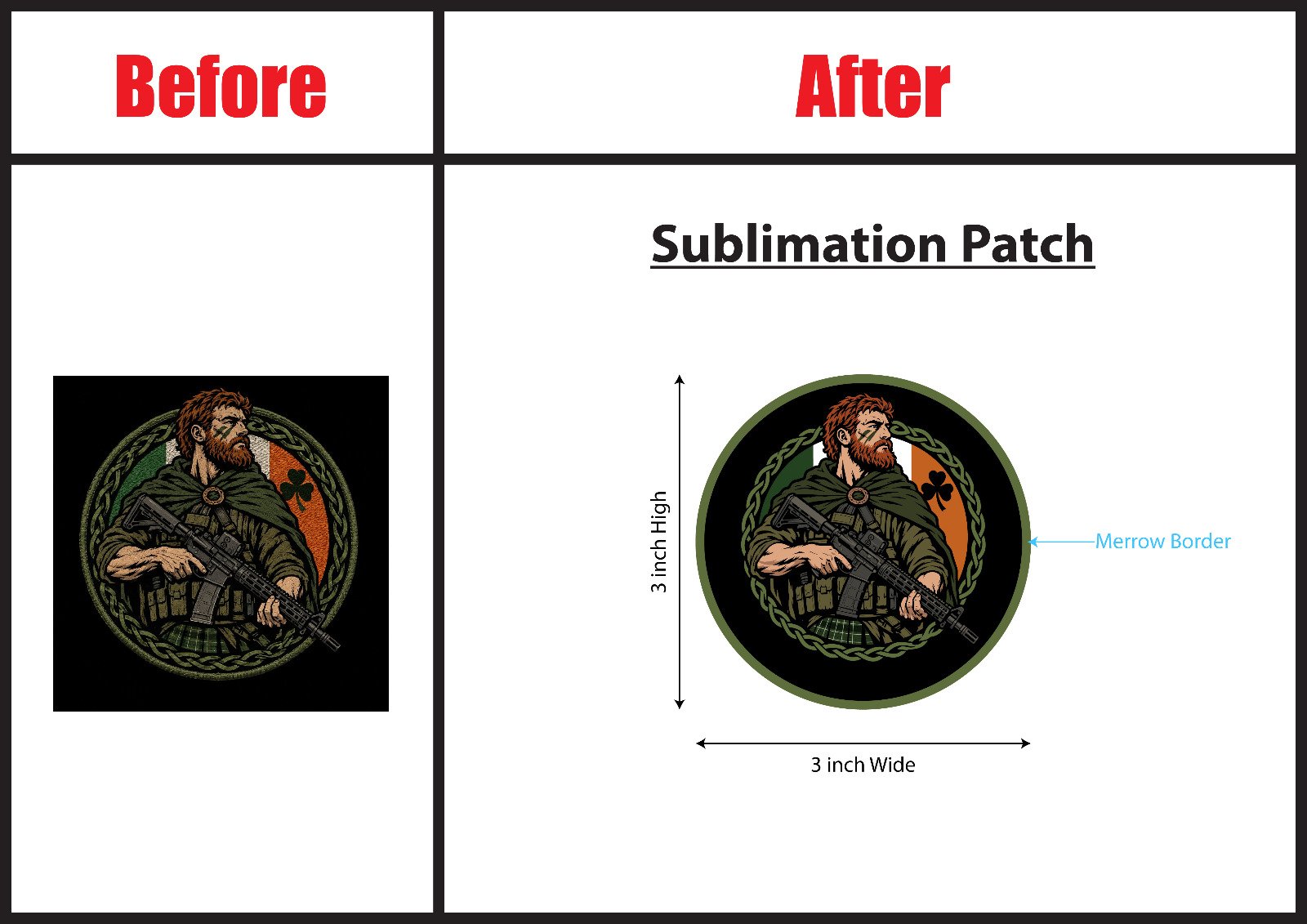
If you’re looking for custom patches in Canada, you’ll quickly realise there are quite a few companies offering pretty much the same thing on the surface. Embroidered patches, PVC patches, woven patches, chenille, leather, iron-on, Velcro and so on.
The harder part is figuring out which company is actually a good fit for what you’re trying to make.
Do you need 10 patches for a small clothing project? A few hundred for a sports team? Custom badges for uniforms? Or something more specialised like PVC morale patches?
I’ve looked at a few of the options Canadian buyers can consider and put together this list of five patch makers worth checking out.
This isn’t meant to say that one company is automatically perfect for everyone. The right choice really depends on your design, quantity, budget, patch type and how quickly you need the order.
1. Custom Patches Maker Canada
If I were looking for a Canadian patch supplier and wanted a company that could handle different types of orders rather than being locked into one particular patch style, Custom Patches Maker Canada would be one of the first companies I’d check.
They offer several different patch styles, including embroidered, PVC, woven, chenille, leather and other custom options.
That variety is useful because not every design should automatically become an embroidered patch.
For example, if you’re making a traditional team badge, embroidery makes sense. If you’ve got a very detailed logo, woven patches can sometimes be a better option. PVC can be a better fit for outdoor or tactical applications, while chenille works really well for varsity and sports designs.
Another thing worth looking at is order flexibility. Not everyone ordering patches is a huge clothing company that needs thousands of pieces.
Sometimes you just want a small batch to test a design before committing to a much larger order.
Custom Patches Maker offers custom patch orders for different quantities and also provides artwork support, which can be helpful if your logo isn’t quite production-ready.
They also offer different backing options such as iron-on, sew-on and hook-and-loop depending on how the patch is going to be used.
Best for: Clothing brands, sports teams, businesses, clubs, uniforms, tactical projects and customers who want several patch styles available from one supplier.
The main reason I’d put custompatchesmaker.ca at number one is flexibility and trust score. You can start with a fairly simple requirement and still have plenty of options if you decide that another patch material would work better.
2. PatchPanel
If you’re specifically looking for a Canadian-made option, PatchPanel is definitely one I’d have on the shortlist.
They are based in Peterborough, Ontario, and are listed as a manufacturer. They also have a strong local review presence, with recent Reddit discussions specifically mentioning their Canadian-made patches positively.
One Reddit discussion about PVC morale patches had multiple users recommending PatchPanel, with one commenter saying their course patches were “absolutely top tier” and another mentioning that their regiment had used them for morale patches.
That kind of recommendation is more useful to me than a company simply saying it makes great patches on its own website.
PatchPanel is particularly interesting if you’re after morale patches, military-inspired designs, course patches or other projects where you want a more specialised patch rather than a basic clothing badge.
Best for: Canadian-made patches, morale patches, military and tactical projects, course patches and customers who prefer working with a Canadian manufacturer.
3. Custom Patch Canada Inc.
Another option worth checking is Custom Patch Canada Inc.
For buyers who mainly need embroidered patches and want to work with a Canadian-based supplier, this is the sort of company I’d compare against the other options before placing an order.
Embroidery is still one of the most popular choices for custom patches because it gives you that traditional stitched appearance that works particularly well on uniforms, jackets, hats, sportswear and club clothing.
The company has a local business presence and is listed as an embroidery service, making it another option to consider when you’re comparing Canadian suppliers.
As always, I’d ask for a proof before production and confirm exactly what you’re getting in terms of backing, size, thread colours and turnaround.
Best for: Embroidered patches, uniforms, sportswear, clubs and traditional patch designs.
4. Eagle Patches
Eagle Patches is another option if you’re after custom embroidered products. They’re remote based Asian and are listed as an embroidery service specialising in custom patches with 3 star rating.
For a straightforward embroidered patch order, a local supplier like this can be worth considering, particularly if you’re looking for a traditional stitched patch rather than something more specialised.
I’d still compare the quote against a few other suppliers because patch pricing can change quite a bit depending on size, quantity, backing and artwork complexity.
If you’re ordering a large quantity, also ask about sample approval before the complete order goes into production.
Best for: Traditional embroidered patches, uniforms, clubs and straightforward custom patch orders.
5. Patches & Labels Co.
If your project involves more than just patches, Patches & Labels Co. is another company worth putting on the comparison list.
They’re based in Richmond Hill, Ontario, and are listed as an embroidery shop.
This type of supplier can be particularly useful for clothing brands and businesses that are looking at patches alongside other branded textile products.
For a fashion brand, for example, you might need woven labels, embroidered branding and patches for the same collection.
Instead of treating the patch as a completely separate project, it can sometimes make sense to compare suppliers that can support more of your overall branding requirements.
Best for: Clothing brands, embroidered branding, patches and textile labelling projects.
What Type of Patch Should You Actually Get?
This is where I’d spend a little time before worrying about which company is cheapest.
The patch maker matters, but choosing the wrong patch construction can make an otherwise good design look disappointing.
Embroidered patches
These are the classic option.
They’re a good fit for team logos, uniforms, clubs, jackets, hats and traditional badges.
If you want that familiar stitched patch appearance, embroidery is usually the first place I’d look.
Woven patches
Woven patches are worth considering when your artwork contains smaller details or finer text.
Instead of relying on thicker embroidery stitches, woven patches use a tighter construction that can reproduce certain details more cleanly.
They’re particularly popular with clothing brands and fashion projects.
PVC patches
PVC is a completely different look.
They’re rubber-like, durable and particularly popular for tactical, outdoor and morale patch applications.
They’re also a good choice if you want a more modern or three-dimensional appearance.
Chenille patches
If you’re making varsity-style or sports patches, chenille is hard to ignore.
The raised yarn gives the patch a bold, textured appearance that you don’t get from a standard embroidered patch.
Leather patches
Leather patches can give clothing and accessories a more premium or rugged appearance.
They’re commonly used on hats, jackets, bags and lifestyle products.
Iron-on patches
If easy application is important, iron-on backing can be convenient.
They’re particularly popular for personal clothing projects, jackets, jeans and bags.
Just remember that application instructions matter. Heat, fabric type and washing conditions can all affect how well an iron-on patch stays attached.
Hook and loop patches
If you need to remove and change patches regularly, hook-and-loop backing makes much more sense.
This is particularly common for tactical gear, uniforms and morale patches.
What I’d Ask Before Ordering
Regardless of which company you choose, I’d ask a few basic questions before paying for the order.
Can I see a proof before production?
You want to know exactly what the finished patch is supposed to look like before hundreds of pieces are made.
What backing should I use?
Don’t automatically choose iron-on just because it sounds convenient. Tell the manufacturer what you’re attaching the patch to and how the item will be used.
What’s the minimum order?
Some suppliers are better suited to bulk orders, while others are more flexible with smaller quantities.
Is digitising or artwork preparation included?
Your logo may look perfect on a screen but still need some adjustment before it can be turned into an actual patch.
What is the turnaround time?
If the patches are for an event, product launch or uniform order, confirm the production and shipping timeline before ordering.
Can I order a sample?
If you’re placing a large order, this is especially worth asking about.
So, Which Patch Maker Should You Choose?
Honestly, I’d narrow it down based on what you’re actually ordering.
If you want a supplier with a broad range of patch styles and flexible options, Custom Patches Maker Canada is a strong place to start.
If Canadian-made production is particularly important to you, PatchPanel deserves a look.
If you’re mainly after traditional embroidered patches, Custom Patch Canada Inc. and Eagle Patches are worth comparing.
And if you’re a clothing brand that needs patches alongside other textile branding, Patches & Labels Co. could make sense.
My biggest piece of advice would be not to choose purely on price.
A patch is a physical product. The quality of the stitching, materials, colours, border, backing and finishing all matter once it is actually attached to a jacket, hat, uniform or product.
Get the artwork proof. Ask questions. Compare the quotes. And make sure the company understands what you’re actually trying to make before you place a large order.That’s going to give you a much better chance of ending up with patches you’re genuinely happy with.