Council regeneration body publishes fresh designs and pushes planning timetable
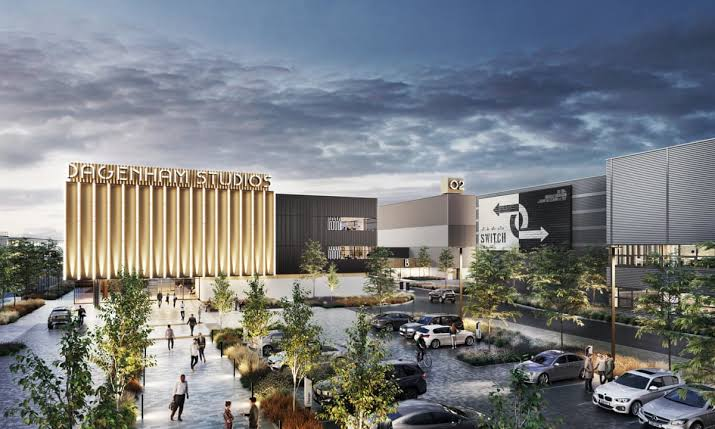
Plans to create a large new film and television production campus in Dagenham moved back onto the spotlight on October 2, 2026, when Be First, the regeneration arm of Barking and Dagenham Council, published updated designs and documentation for the proposed site at Dagenham East. The material outlines a multi stage studio campus with multiple sound stages, workshops and production offices, framed by promoters as the most significant expansion of London studio capacity in a generation.
What the scheme would include
The current proposals, as described in the council materials, envisage a campus of roughly 18 to 22 acres on former industrial land, configured around a cluster of large sound stages, backlot and supporting facilities. The public material highlights several headline components: six large sound stages, set construction workshops, post production and office space, and ancillary facilities such as hair, make up and costume areas. Proponents say the scale is intended to meet demand from high end television and big budget film producers that have repeatedly cited a shortage of reliable, large scale stage space in and around London.
Backers pitch jobs and local economic benefit
Be First and council leaders are emphasising wider economic outcomes as much as screen capacity. The published material projects hundreds to more than a thousand direct local jobs during construction and operation, with an ongoing annual economic contribution that promoters estimate in the tens of millions of pounds. Local elected officials and regeneration executives describe the plan as part of a broader strategy to pivot former manufacturing land toward creative economy uses and to create apprenticeships and supply chain opportunities for borough residents.
Why industry observers care
For production companies and studios the attraction is practical: major streaming and studio projects require long uninterrupted runs on large, controllable stages, plus nearby space for set building, post production and crew facilities. London has seen a sustained pipeline of high value productions in recent years, and industry groups have repeatedly warned that capacity constraints risk pushing work elsewhere. A new, well located campus in east London would aim to capture that demand and reduce the need for productions to relocate large elements of their shoots out of the capital or overseas.
Where the plan stands in the approvals process
The updated designs published by Be First are part of the pre application planning process, and the project still needs to satisfy normal planning committees and statutory consultees. Local consultation events and a public virtual reveal are scheduled as part of Be First’s outreach, and the material indicates the developers intend to work through detailed design and environmental assessments before submitting a formal planning application. Industry partners and potential operators are being courted in parallel, with the regeneration body stressing it wants an operator experienced in delivering large studio campuses.
Local politics and community questions
While council leaders have framed the proposal as a long term employment and regeneration opportunity, neighbouring residents and local groups typically raise questions in schemes of this scale about transport, noise management, site remediation, traffic and the way benefits will be distributed locally. Be First’s public materials acknowledge those issues and present community benefits pledges including apprenticeships, training pathways and community engagement as part of the package that will accompany any developer or operator agreement.
How this fits into the wider UK production landscape
The move to expand studio capacity in the UK has gathered momentum in recent years as global streamers and major studios increase production volumes. London in particular combines talent pools, post production services and existing infrastructure, but it has lagged behind some competitors when it comes to very large contiguous studio campuses. A successful Dagenham project would expand London’s ability to host extended large scale shoots, and could help retain and attract productions that otherwise might seek studios elsewhere in the UK or abroad.
Next steps and what to watch for
Promoters are preparing for a period of public consultation and technical assessment, with the aim of taking the scheme to a planning decision once the environmental and transport studies are complete and an operator or investor partner is confirmed. Observers will watch for the formal planning application, any named operational partner, and the way the project secures community and political support through the committee stages. If approved and built, the campus could become a major node in London’s screen sector and alter the location calculus for big budget filmmaking in the capital.
The Dagenham proposals are an example of how local authorities and private partners are positioning to capture more of the expanding global production market. For London and the UK the key questions will be whether the project moves from concept to shovel ready construction, how quickly that happens, and whether the promised local benefits materialise alongside the studio capacity.