PBOC fine tunes short term liquidity with large reverse repos ahead of quarter end and National Day holiday
China’s central bank supplied hefty short term cash to markets on September 28 as quarter end and the week long National Day holiday approach, combining overnight, seven day and 14 day reverse repos to smooth money market strains even as net liquidity was modestly withdrawn after accounting for maturing facilities.
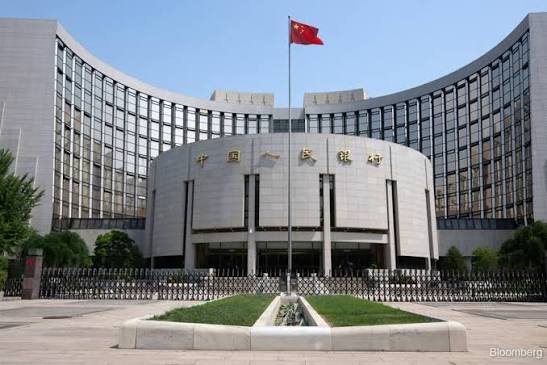
Beijing, September 29, 2026 China’s central bank stepped in to carefully manage short term funding conditions on September 28 as the quarter end and the Golden Week National Day holiday approached, deploying a mix of overnight, seven day and 14 day reverse repurchase agreements to keep interbank rates stable and ensure banks had access to cash for payments. The People’s Bank of China carried out a concentrated set of open market operations that market trackers and central bank watchers described as substantial in gross terms. The operations included large overnight injections supplemented by seven day and 14 day reverse repos, which together amounted to roughly 1.1 trillion yuan in gross short term liquidity on the day. That volume follows a pattern of stepped up PBOC activity in recent months designed to smooth strains around quarter end dates and holidays. Why the operations matter Quarter ends and long public holidays routinely concentrate payment flows and tax deadlines, which can push short term borrowing costs higher if banks do not have easy access to cash. Left unmanaged, intraday and overnight rate spikes can feed through into funding costs for financial institutions and, indirectly, the wider economy. By offering a range of maturities, the PBOC gave money market participants the option to take liquidity for only the time they needed, and signaled an intent to keep short term rates well anchored. The PBOC’s package of operations also needs to be read in the context of an active calendar for policy and market management this quarter. Authorities have in recent months broadened the toolkit to include more frequent and flexible overnight operations, and have used medium term lending facility instruments to adjust banks’ longer dated funding when needed. The mix of tools gives the central bank more precision in controlling money market rates without changing headline policy rates. Net liquidity effect and interpretation Although the gross size of the reverse repo operations was large, market analysts noted that taking into account reverse repos maturing on the same day and other operations, the net liquidity impact was not as large as the headline number suggests. In the most recent operations, the PBOC had previously conducted medium term lending facility operations and had older reverse repos maturing, which together produced a modest net withdrawal on the day according to trade desk analyses. That pattern does not indicate a broad shift to monetary tightening. Instead, it reflects the PBOC’s dual task of ensuring adequate cash for immediate payment needs while managing the overall liquidity stance across the banking system. The central bank’s combination of short and medium term tools allows it to inject or withdraw funds with fine granularity, smoothing volatility without moving benchmark interest rates. Market reaction and bank funding indicators Money market rates tied to very short term borrowing, such as the seven day secured borrowing rate among deposit taking institutions, remained close to recent policy anchored levels following the operations. Traders reported that spreads between overnight and seven day rates narrowed after the injections, a sign that the operations eased immediate funding pressure. Investors are watching the runs of such operations closely because they come at a time when China faces a heavy government bond issuance calendar for the quarter, and when consumption and investment readings have shown mixed momentum. Ensuring stable funding conditions around the holiday reduces the risk of disruptive rate moves that could complicate bond auctions or local government payment flows. What to watch next Markets will look for PBOC announcements and the central bank’s open market operations schedule through the first week of October, when the interbank market will be partially closed for the National Day holiday. Traders will monitor whether the PBOC maintains the overnight facility frequently and whether it adjusts the size or maturity mix of operations after the holiday to offset any seasonal distortions. Beyond the immediate holiday window, attention will remain on broader policy signals, including medium term lending facility actions and any changes to reserve requirement settings, which together indicate how much stimulus the authorities are prepared to sustain while balancing financial stability risks. Why this matters for the economy Short term liquidity management matters for China’s broader economy because it underpins the cost and availability of funding for banks, developers and businesses. By smoothing short term volatility now, the central bank aims to prevent episodic funding squeezes that can complicate credit flows to the real economy. For international investors, the operations also provide clues on how Beijing is marrying a cautious growth support approach with tighter micro prudential controls across the financial system. As quarter end and Golden Week pass, the PBOC’s actions over these days will be parsed for indications of whether authorities plan more aggressive easing or a steadier, surgical approach to support growth while containing financial risk.
Topics
LocationPeople’s Bank of China