Islamabad has formally opened negotiations with a visiting International Monetary Fund review mission as the government seeks roughly $1.2 billion in new financing under two on going programmes, Pakistani officials and local reporting said.
What is happening now
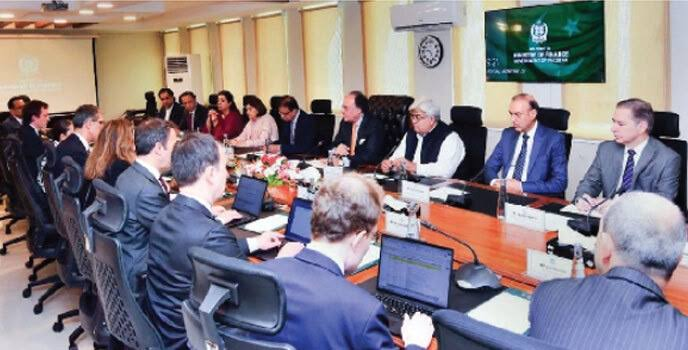
On Tuesday Pakistani finance officials met with the IMF staff mission led by Iva Petrova to begin a biannual review of the country s Extended Fund Facility, a roughly 7 billion dollar programme, and a concurrent review of a 1.4 billion dollar Resilience and Sustainability Facility. Pakistani officials told the Fund the meetings will cover recent macroeconomic indicators, revenue performance, and progress on structural reforms, including changes to procurement rules and governance arrangements for state owned enterprises.
Government briefings and media reporting during the opening round said Islamabad expects that a successful conclusion of the reviews could make available about 1.2 billion dollars: roughly 1.0 billion under the EFF and about 200 million under the RSF. Officials cautioned that final release of funds will depend on the outcomes of the mission s assessment and may require executive board approvals and, in some areas, waivers if structural benchmarks have slipped.
Key negotiation items and government steps
Pakistan s delegation has highlighted an improving investment climate and what it described as stronger macroeconomic indicators to the visiting IMF team. At the same time the Fund is focused on several outstanding structural issues and legislative changes that were part of the programme s conditionality.
One prominent topic during talks is governance of the Pakistan Sovereign Wealth Fund and related state owned enterprises. IMF staff have flagged non compliance with an end March structural benchmark to amend the Sovereign Wealth Fund law and adopt strengthened governance safeguards for a portfolio of state owned firms worth several billion dollars. Pakistan s authorities told the mission they have notified new procurement rules and taken administrative steps ahead of a September 30 deadline, measures the government says are designed to increase transparency and speed in public procurement.
The new procurement rules make a digital procurement platform mandatory for federal agencies in many cases, introduce independent grievance and blacklisting mechanisms, and include targeted exemptions for direct contracting in time sensitive or remote projects. IMF staff have previously raised concerns about preferential treatment for state owned enterprises in procurement, an issue likely to feature in the review s deliberations.
Revenue, sanctions and near term fiscal risks
Revenue performance is another live subject. Pakistani tax authorities told the visiting mission they expect to meet the agreed July to September quarterly revenue target, conditional on final month collections. Officials briefed the mission on the economic impact of disruptions in regional shipping and energy markets linked to the Gulf conflict, which they said had temporarily depressed import related tax receipts. The authorities provided an estimate of revenue losses tied to those disruptions and asked the IMF to take such shocks into account when assessing near term targets.
That context matters because IMF disbursements under the EFF and RSF are conditioned on meeting specified quantitative and structural benchmarks. If the mission judges that targets are met or that missed benchmarks can be addressed through remedial steps and executive board waivers, the approved disbursements could arrive by late October or in early November, according to the government s publicly stated timetable.
Why this matters
The ongoing reviews are central to Pakistan s near term financing and balance of payments outlook. Releases under the IMF arrangements have been a major source of external financing for Pakistan s macroeconomic stabilisation programme. Timely disbursements would ease pressure on foreign exchange reserves and help the government manage scheduled external repayments and budget funding needs in the coming months.
For investors and markets, the reviews are a signal of whether Islamabad is making sufficient progress on transparency, procurement, and state owned enterprise governance. Those reforms are also important for Pakistan s ability to access other commercial and official financing, and for raising investor confidence so the country can diversify sources of external funding beyond programme lending.
Next steps and timing
The IMF mission will continue meetings with the finance ministry, the State Bank of Pakistan, the Federal Board of Revenue, and provincial finance officials during the coming days. Pakistan s public statements indicate the government hopes a staff level agreement can be reached that clears the way for the next disbursement. Any final approval for the funds would depend on IMF staff s recommendation and the timing of decisions by the Fund s executive board.
While the broad contours of the talks are clear, the mission s assessment of pending structural benchmarks and the scale of any required waivers will determine whether the 1.2 billion dollars is disbursed on the government s preferred timetable, or whether the process extends further into the autumn.