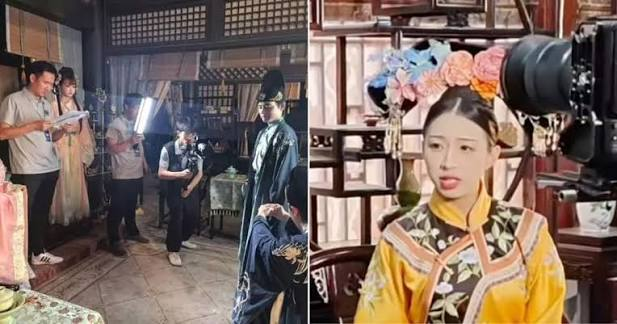
Hengdian World Studios, the vast film and television complex in Zhejiang province long billed as China’s Hollywood, has quietly repurposed parts of its production infrastructure into a paid experience where visitors can star in their own short dramas. The offer, which charges roughly 218 yuan for an hour and higher rates for styling and makeup, was introduced this summer as studios nationwide confront a fast growing market for AI generated short video content that has hollowed out demand for low budget live shoots.
A new revenue lane for an old set
The change is practical and visible. Elaborate period streets and palace courtyards that once hosted dozens of small scale television crews are increasingly used for staged tourist shoots, costume rentals and guided one hour productions aimed at social media sharing. For a modest fee, paying guests are paired with small local crews, fitted in wardrobe, and filmed in a few staged scenes that are edited into short dramas they can post online.
Studio operators and local media say the pivot responds to steep declines in short live action commissions. AI based video production tools have proliferated, allowing producers to create short dramas without on location shoots, cutting costs and turnaround time dramatically. The result has left many sub studios and freelance technicians with fewer orders, and pushed Hengdian to monetize its elaborate backlot by selling an immersive creator experience to visitors and domestic travelers.
Why Hengdian matters to China’s entertainment economy
Hengdian is not a boutique attraction. The complex spans dozens of square kilometers, contains multiple replica historical districts, and has supported thousands of crew members in high seasons. That scale is why the industry and observers see the turn to tourism as more than a novelty. It is a signal of structural change in China’s entertainment ecosystem, where synthetic media is displacing routine production work, and where heritage film locations must find alternatives to fill soundstages and keep crews employed.
Local directors who once guided background actors are now double hatted as experience guides, helping amateurs deliver believable takes and teaching basic blocking. Makeup artists and costume teams have gained an alternative income stream from the styling packages sold to visitors. Some studios have launched group packages for families, corporate team building, and themed weddings, generating higher per visit revenue than standard admission alone.
AI disruption, human experiences
The shift at Hengdian highlights a broader paradox. AI tools have automated much of the routine work of generating short form scripted content. At the same time, appetite for live, human centered experiences is growing among urban tourists who value authenticity and personal content for their social channels. Hengdian’s do it yourself dramas combine both trends, offering an analog antidote to AI production while feeding the social media driven demand for shareable moments and narrative content.
Industry commentators say the experience economy can soften the blow for some workers, but it is not a full substitute for lost production volume. Live shoots paid professional wages for camera, lighting, set dressing and extras. Hour long tourist experiences are more labor efficient, and they do not replace the sustained employment provided by episodic shoots. For technicians who specialized in multi day projects, the new model offers part time income rather than the steadier contracts of the past.
What this means for creative labour and cultural tourism
Hengdian’s pivot matters because it makes visible the career and business decisions facing China’s film hubs. Political and industry leaders have begun to focus on regulation, intellectual property and labor protection for the creative sector, but the market disruption created by synthetic media is moving faster than policy in many areas. The trend is already reshaping how new entrants learn craft, how crews organize, and how film cities position themselves to tourists and investors.
For cultural tourism, the experiment is likely to be durable. Attractions that can blend convincing production values, hands on participation and convenient social media output are well placed to attract mainland domestic visitors who prioritize experience over passive sightseeing. Hengdian’s success will depend on its ability to balance visitor throughput with the preservation of sets, and on whether the broader industry recovers sufficient demand for conventional shoots to keep the complex anchored as a working production base.
Looking ahead
Hengdian’s move is not a single business decision, but a barometer of a larger transition at the intersection of technology, culture and labor. As AI tools continue to lower the cost of producing narrative clips, film cities across China will have to decide whether to double down on production incentives, shift toward experiential tourism, or develop hybrid offerings that keep both tourist revenue and professional shoots viable. For now, Hengdian’s short drama packages offer a novel visitor product, and a stark reminder that rapid technological change is forcing established creative ecosystems to reinvent themselves.