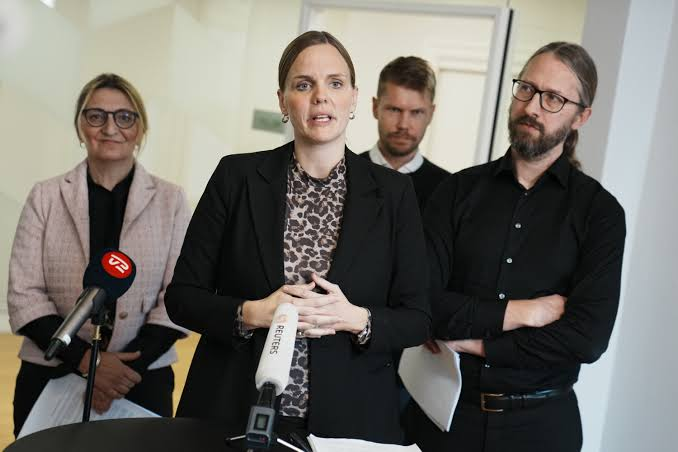
The Danish government has published a draft bill that would establish a national minimum age of 15 for access to defined social media and video sharing services, and the text has been opened for public consultation. The measure, framed by ministers as an effort to protect children from harmful content and addictive recommendation algorithms, would apply to services that qualify as online social networking or video sharing platforms.
What the draft bill would do
Under the draft, users under 15 would be prohibited from holding independent accounts on platforms that fall within the bill's scope. The law is written to place the legal prohibition on minors rather than directly on platforms, a drafting choice intended to avoid conflict with the European Union rules that govern digital services. The government says the policy is aimed primarily at the recommendation engines and commercial incentives that keep children engaged for long periods.
Drafting notes accompanying the consultation say the regulation will focus on services that meet the definitions used in EU digital legislation, including online social networking services and video sharing platform services. That scope means major global services are likely to be affected, and that the exact list of impacted platforms may be clarified later by regulatory guidance.
Why the government says the rule is needed
Ministers point to statistics showing very early and widespread use of social media among Danish children. Government material cited in public briefings says almost half of children have a social media profile by age ten, and that a large share of children are active on platforms well before their teenage years. Officials argue that current age gates and platform self regulation have not prevented extensive underage access, and that national law is needed to protect young people from harms linked to prolonged exposure, targeted advertising, and recommendation systems.
The proposal also arrives against a backdrop of broader European initiatives aimed at strengthening protections for minors online. Danish ministers have said they want national measures that go further or are clearer than some expected EU-level proposals, while also remaining compatible with bloc rules.
How the draft bill approaches enforcement and technical details
The draft leaves many operational details to subsequent regulation, and the consultation documents make clear the question of how age will be verified remains open. Legal advisers and law firms commenting on the bill note the government is attempting to thread a legal needle, by imposing the prohibition on children while avoiding direct conflicts with EU harmonization rules that restrict member states from placing additional obligations on platforms.
Consultation material identifies the Agency for Digital Government as likely to publish an indicative list of affected services and to provide guidance on practical compliance steps. The consultation period is set to run for several weeks, allowing industry, civil society, privacy experts, child welfare groups and platform operators to respond on feasibility, privacy risks, and enforcement approaches.
Reaction from industry and experts
Legal commentators warn that age verification raises privacy and security tradeoffs if it requires children to hand over identity documents or use third party verification services. Privacy advocates urge the government to prioritise privacy preserving verification designs and to spell out safeguards that prevent the creation of centralized identity databases for online access.
Child protection groups broadly welcomed the ambition to curb early exposure to targeted commercial content, while some youth and digital rights organisations warned against measures that would effectively exclude teenagers from vital civic and social spaces without workable alternatives.
Why this matters
Denmark is among a growing set of countries that are trying to limit underage use of mainstream social platforms. The proposal is important because its design choices, especially the decision to target minors rather than platforms, may influence how other EU member states craft national measures around the same policy objective. The consultation outcome will shape rules that could affect how platforms operate in Denmark and how children engage with online services for years to come.
The draft will now enter a public consultation process, during which the government expects to gather technical and legal input ahead of finalising the bill and scheduling it for parliamentary consideration. Observers will watch whether the consultation prompts significant changes on enforcement, privacy safeguards, and the balance between national measures and forthcoming EU legislation.
For parents, educators and platform operators, the consultation represents a near term window to influence the detailed rules that will define how Denmark regulates childrens access to social media.