Home / Others / Belgian and French police dismantle transnational drug network that exploited Brussels Airport
Belgian and French police dismantle transnational drug network that exploited Brussels Airport
Authorities arrested 21 people and carried out 27 searches after an investigation uncovered a method that used cheap airline tickets and inside contacts to extract illicit consignments from the airport baggage hall.
By M.Naveed · Published October 2, 2026 at 1:27 PM
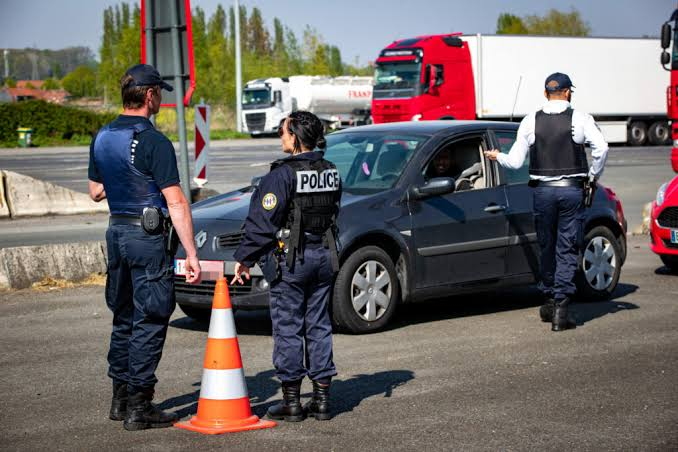
Police execute searches and arrests linked to a trafficking network that used Brussels Airport as an entry point for narcotics.
Coordinated action targets years long smuggling ring
Belgian and French law enforcement agencies, with support from Europol, announced the dismantling of a transnational drug trafficking network that used Brussels Airport as a gateway for cocaine and cannabis shipments. The authorities arrested 21 people and executed 27 searches in Belgium and France as part of an operation that investigators say follows a probe opened in February 2025. The inquiry began after police intercepted several consignments arriving at Brussels Airport that contained significant quantities of drugs concealed in passenger luggage. Over the course of the investigation, officers identified an organised method of moving narcotics from arriving flights into the Belgian hinterland without detection. The scheme combined recruited couriers, inside accomplices and opportunistic collectors in the arrivals hall.
How the ring is alleged to have worked
According to investigators, couriers would board flights into Brussels with suitcases containing drugs. After arrival, rather than collect the luggage using their own itinerary, the couriers would intentionally leave the bags on the carousel. The network then relied on so called extractors, recruited largely through social media, who bought inexpensive last minute tickets to gain legitimate access to the secured baggage areas. Those extractors retrieved the drug filled luggage and transported it to prearranged locations near the airport, where other members of the organisation took over. As the probe developed, police say they uncovered evidence that some airport employees were complicit in facilitating removals of contraband before suitcases reached the public carousel. Authorities seized cash, vehicles, weapons and luxury goods during searches, and have linked the organisation to routes stretching beyond Belgium into neighbouring countries.
Scale and international reach
Investigators reported earlier seizures associated with the same network, including a haul discovered in February 2025 of roughly 30 kilograms of cocaine hidden in unattended sports bags from a flight from Cancun, and an April 2025 customs interception of about 30 kilograms of cannabis arriving from Canada. Those initial findings prompted a sustained judicial investigation that revealed links with actors in France and the Netherlands, and a logistical pattern that allowed traffickers to exploit the airport hub repeatedly. The broad operation that culminated in the recent arrests included searches across Belgium and France, and coordination with partner agencies in the region. Europol provided operational support and intelligence sharing during the action day.
Evidence seized and next steps
Authorities reported the seizure of tens of thousands in cash, several vehicles, jewellery, a money counting machine and multiple weapons during searches. Police statements indicate the judicial phase of the inquiry remains active. Prosecutors will review the evidence to press charges where warranted and to request pretrial custody or other judicial measures for suspects deemed flight risks. Law enforcement officials stressed that dismantling a network of this type does not eliminate the broader trafficking threat. The Belgian judicial investigation will now focus on determining leadership roles, financial flows and the full geographical footprint of the organisation, with the aim of disrupting remaining cells and confiscating criminal assets.
Why the case matters
The operation highlights a persistent vulnerability for large international airports, where the combination of high passenger volumes, complex baggage handling systems and numerous contractors can be exploited by organised crime. Unlike the stereotype of couriers concealing packages on their person, this network used the airport infrastructure and social media recruitment to create distance between the primary traffickers and the physical movement of drugs. For Brussels, a major European aviation hub, the case raises operational and policy questions for airport operators, security services and customs authorities. It may prompt reviews of access rules for baggage halls, ticketing and identity verification at points that allow non travelling passengers to enter restricted zones, and enhanced monitoring of staff with access to secured areas.
Regional cooperation and the intelligence picture
Officials leading the operation pointed to the cross border nature of the trafficking and the need for multinational cooperation. Europol said the action day targeted high value individuals and involved joint work by Belgian and French investigators, supported by Dutch authorities and European judicial cooperation structures. That shared approach aims to follow the money, identify supply chains and prevent the adaptation of tactics by criminal groups. Investigators also signalled that legal changes and policing resources at regional level are likely to be revisited to keep pace with evolving smuggling methods. In recent years, European agencies have warned about shifts in cannabis supply routes and about organised groups exploiting legal cannabis markets abroad as part of transatlantic trafficking chains.
What to expect next
The immediate legal process will determine which suspects are formally charged and which are held in pretrial detention. Judicial authorities will also pursue asset tracing and seizure where evidence links proceeds to criminal activity. On the operational side, Brussels Airport management and security partners are expected to cooperate with investigators and to undertake internal reviews of procedures that allowed the alleged scheme to persist over multiple years. The case serves as a reminder for airports across Europe that criminal networks adapt quickly. Policymakers, prosecutors and front line officers will be watching the judicial developments closely for lessons that can be applied to reduce the risk of similar intrusions into aviation supply chains in the future.
M. Naweed is a contributor at QuantumNova covering a variety of topics and current developments. Their work focuses on informative reporting, credible information, and presenting stories clearly for readers.
Authorities closed a busy Helsinki Tallinn shipping lane after a funnel shaped metal object was spotted near Suomenlinna. The Finnish Navy and police later concluded the item was most likely an old shipwreck part and not an explosive, and the lane was reopened overnight.
Denmark return to UEFA Nations League action on October 4, hosting Wales at Parken Stadium as the home side look to rebound from a mixed start to the campaign. Team news, tactical questions and the wider implications for Denmark are explained.
With Brazil set to vote on October 4, the United States and Australia temporarily halted consular operations after Brazilian federal police executed warrants probing alleged threats to US diplomatic sites. Authorities say no evidence has yet been found and investigations continue.
From October 1, 2026 Austria reclassifies many 25 km/h electric two wheelers as L1e-B mopeds, requiring registration, insurance, a driving licence and helmet use, and banning them from cycle lanes. Authorities and rider groups warn of enforcement and compliance challenges for couriers and older users.